Buy saunameister.eu ?
We are moving the project
saunameister.eu .
Are you interested in purchasing the domain
saunameister.eu ?
domain@kv-gmbh.de · 0541-91531010
Buy saunameister.eu ?
When do you use il faut and il ne faut pas?
"Il faut" is used to express what is necessary or required, while "il ne faut pas" is used to express what is not allowed or should be avoided. For example, you would use "il faut" to say "il faut étudier pour réussir" (it is necessary to study to succeed), and "il ne faut pas" to say "il ne faut pas fumer dans ce lieu" (smoking is not allowed in this place). These expressions are used to give advice, make recommendations, or set rules. **
What is the difference between il faut que and il faut?
"Il faut" is used to express a general necessity or obligation, while "il faut que" is used to introduce a specific action or event that is necessary or required. For example, "il faut manger" means "it is necessary to eat" in a general sense, while "il faut que tu manges" means "you need to eat" in a specific sense. "Il faut" is used to make a general statement about what is necessary, while "il faut que" is used to specify what needs to be done. **
Similar search terms for Valpolicella-Classico-Il-Sasso
Top-Angebote
Products related to Valpolicella-Classico-Il-Sasso:
-
Valpolicella Classico Viviani 2023The Valpolicella Classico by Viviani expresses the most youthful, versatile, straightforward, and fragrant character of the territory: an exceptional blend of modernity and territorial adherence. The tasting is indeed young and smooth, with a crunchy and easy-drinking sip, resulting from the processing carried out exclusively in steel of the indigenous grapes. It is a label that pairs perfectly with Mediterranean cuisine recipes, first courses, cold cuts, white meats, and even with flavorful fish dishes. It is the everyday red par excellence: simple and immediate but capable of delivering great satisfaction at the table, accompanying home cooking. This Valpolicella Classico Viviani originates from a blend of indigenous red grape varieties, where, alongside 70% Corvina Veronese, we find 30% Rondinella. The must obtained from the soft pressing of the grapes ferments spontaneously in steel containers thanks to the action of indigenous yeasts, in respect of the most authentic peasant traditions. The wine remains in steel to mature until February, and then further refines for two months directly in glass, after bottling. The Viviani Valpolicella Classico develops in the glass with a typically ruby color, crossed by light violet veins, evident at the rim. The nose is filled with fine and subtle aromas, announced with elegant fruity and spicy touches, enriched also by nuances of aromatic herbs. On the palate, it is easy-drinking, with a tasty and satisfying sip, relying on a tannic structure finely integrated into the overall structure. A Veneto red that, with this vintage, satisfies the main critics in the sector, not just Italian: considering the advantageous price, not tasting it would be a shame.9,00 £*Shipping: 48,00 £Secure redirect to the provider
-
Valpolicella Classico Speri 2025The Valpolicella Classico is the simplest wine with which the Speri winery tells us about the different facets of the Valpolicella terroir. In this label, fresh and light sensations dominate both on the nose and on the palate, enhanced by the choice made during vinification and aging, where only steel and vitrified cement are used, leaving wood aside. A bottle with a immediate profile, appealing also thanks to the final price at which it is offered, truly encouraging for those who want to start getting to know the Venetian reds. This Valpolicella Classico is born from a blend of indigenous red grape varieties from the Veneto region, specifically Corvina Veronese, Rondinella, and Molinara. These three varieties are cultivated by Speri using the traditional pergola system, in plots located near the municipalities of San Pietro in Cariano, Fumane, and Negrar. The must ferments in steel tanks at a constantly monitored temperature, while the subsequent malolactic fermentation takes place in vitrified cement tanks. It then matures in cement for a few months, until the bottling procedures begin. The Veneto wine Valpolicella Classico produced by the Speri winery presents itself to the eye with a beautiful ruby red color, crossed by slight more violet reflections, especially evident at the rim. The nose is winey, with aromas reminiscent of wildflowers and aromatic herbs, enriched in the finish by more balsamic and spicy notes. On the palate, it has a linear and clear entry, characterized by a fresh sip; it ends with an aftertaste marked by an almond flavor. A label that preserves the most immediate traits of the land from which it comes, perfect for accompanying culinary recipes of the Mediterranean tradition.12,00 £*Shipping: 48,00 £Secure redirect to the provider
-
Valpolicella Classico Secondo Marco 2022Il Valpolicella Classico firmato Secondo Marco è un vino rosso veneto dai tratti interessanti. Vi è infatti un bel connubio fra la leggerezza del profilo e l’anima complessa che si riscontra al naso e al palato, dove la beva è alimentata da una buona sapidità. Una bottiglia che va assaporata con attenzione per coglierne le differenti sfumature, che trasformano le tradizioni della Valpolicella in un qualcosa di più moderno e accattivante, capace di strizzare l’occhio anche dal punto di vista dell’immagine, con una grafica che, sull’etichetta, si afferma con originalità. Il Secondo Marco Valpolicella nasce da un taglio in cui, oltre a Corvina, Corvinone e Rondinella, ritroviamo anche altre uve a bacca rossa ammesse dal disciplinare. I grappoli vengono raccolti con attenzione durante la fase di vendemmia manuale, e dopo la diraspatura gli acini vengono pressati sofficemente. Il mosto fermenta macerando per circa due settimane a contatto con le bucce. Il vino matura per sei mesi in vasche di cemento, per poi essere trasferito in botti dalla capacità di 50 ettolitri, dove rimane per ulteriori sei mesi a riposare. Prima della messa in commercio vi è un ulteriore periodo di 3 mesi di affinamento trascorso in vetro. Il rosso Valpolicella Classico di Secondo Marco si palesa all’occhio con un colore rubino, caratterizzato da una particolare intensità. E’ la frutta ad affacciarsi per prima al naso, con note soprattutto di ciliegia, mentre sul finale le narici vengono circondate da tocchi più speziati. All’assaggio è di medio corpo, con un sorso caratterizzato da un gusto fresco e sapido, di buona bevibilità. Un’etichetta versatile in tavola, dove oltre ai classici abbinamenti con carni bianche e ricette di terra, si può sperimentare anche con i pesci in umido, cucinati con una base di pomodoro.18,00 £*Shipping: 48,00 £Secure redirect to the provider



-
Why is it souhaite-t-il and not souhaite-s-il?
In French, the pronoun "il" (he) is combined with the verb "souhaiter" (to wish) to form the phrase "souhaite-t-il" because of the rule of verb inversion in interrogative sentences. When forming a question in French, the subject pronoun and the verb are inverted, so "souhaite-t-il" follows this rule. The "t" is added to create a liaison between the verb and the pronoun, making the pronunciation smoother. **
-
What are your tips for the German Classico?
To enjoy the German Classico, make sure to immerse yourself in the rich history and intense rivalry between Bayern Munich and Borussia Dortmund. Learn about the key players on both teams and their playing styles to appreciate the tactical battle on the field. Additionally, try to watch the match with friends or fellow fans to enhance the experience with lively discussions and friendly banter. Lastly, don't forget to savor the passion and excitement of one of the most anticipated matches in German football. **
-
How does "il faut" work in French?
"Il faut" is a common expression in French that is used to convey the idea of necessity or obligation. It is followed by an infinitive verb and is used to express what needs to be done or what is necessary in a given situation. For example, "Il faut manger" means "It is necessary to eat." This expression is used to give advice, make suggestions, or express general truths. **
-
What comes after il faudrait in French?
In French, "il faudrait" is followed by the infinitive form of a verb. This construction is used to express a suggestion or a polite request. For example, "il faudrait partir tôt" means "it would be necessary to leave early." **

What is an El, Sl, and Il?
An El, Sl, and Il are all suffixes used in the English language to form adjectives. "El" is used to form adjectives that mean "pertaining to" or "characterized by," such as in the word "musical." "Sl" is used to form adjectives that mean "tending to" or "inclined to," such as in the word "careful." "Il" is used to form adjectives that mean "having the nature of" or "capable of," such as in the word "flexible." These suffixes help to create new adjectives by modifying the meaning of the base word. **
What do the abbreviations el and il mean?
The abbreviation "el" typically stands for "elevated" and is commonly used in the context of transportation systems, such as an "el train" which refers to an elevated railway. On the other hand, "il" is often used as an abbreviation for "Illinois," which is a state in the United States. It can also be used as an abbreviation for "in-line" in various contexts, such as in sports or technology. **
Top-Angebote
Products related to Valpolicella-Classico-Il-Sasso:
-
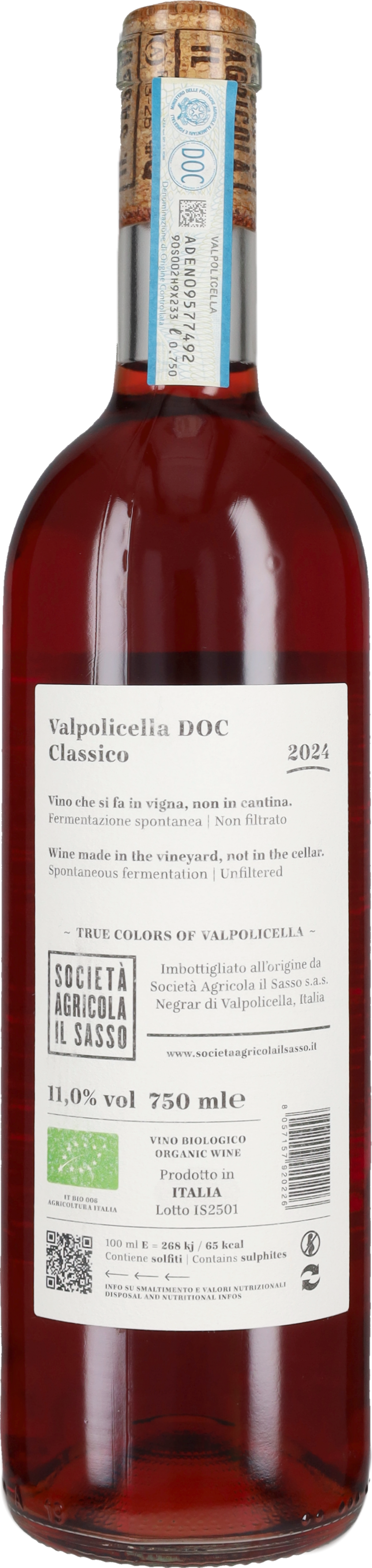
Valpolicella Classico Il Sasso 2024Il Valpolicella Classico della società agricola Il Sasso è un rosso tipico di questa nota zona enologica veneta realizzato a partire da un assemblaggio di uve autoctone quali Corvina, Corvinone e Rondinella. Si distingue fin da subito da altre etichette della zona come un’espressione unica e volutamente lontana dagli standard organolettici della denominazione, giocata al 100% su leggerezza e bevibilità. Un’interpretazione di Valpolicella più vera e diretta, come ama definirla Stefano Bellamoli, il vigneron di casa. La società agricola Il Sasso produce questo Valpolicella Classico a sud di Negrar, nel cuore della zona classica della denominazione, a 300 metri di altitudine su terreni aspri ricchi di calcarenite gialla, una roccia sedimentaria simile al tufo, di colore giallo e ricca di fossili marini. In vigna la viticoltura è sostenibile “l’unica agricoltura possibile” secondo Stefano che ritroviamo in etichetta contraddistinta dalla certificazione biologica. In cantina non si ricorre ad alcun tipo di trucchetto enologico, la fermentazione è spontanea a partire da lieviti indigeni e ha luogo in piccoli tini di acciaio, dove il vino sosta fino a Primavera prima dell’imbottigliamento. Il Valpolicella Classico di Il Sasso è un ritratto atipico di Valpolicella fin dal colore che si mostra rosso scarico nel bicchiere con riflessi quasi rosati. Al naso è molto profumato e leggiadro, caratterizzato da note di piccoli frutti rossi, fiori freschi ed erbe spontanee mentre in bocca è dritto, succoso, asciutto con tannini molto controllati. Ottimo da bere appena fresco all’ora dell’aperitivo in abbinata a un bel tagliere di salumi e di formaggi freschi. Pronti a scoprire insieme a Stefano de Il Sasso il nuovo volto, agile e beverino, della Valpolicella Classica?19,00 £*Shipping: 48,00 £Secure redirect to the provider
-
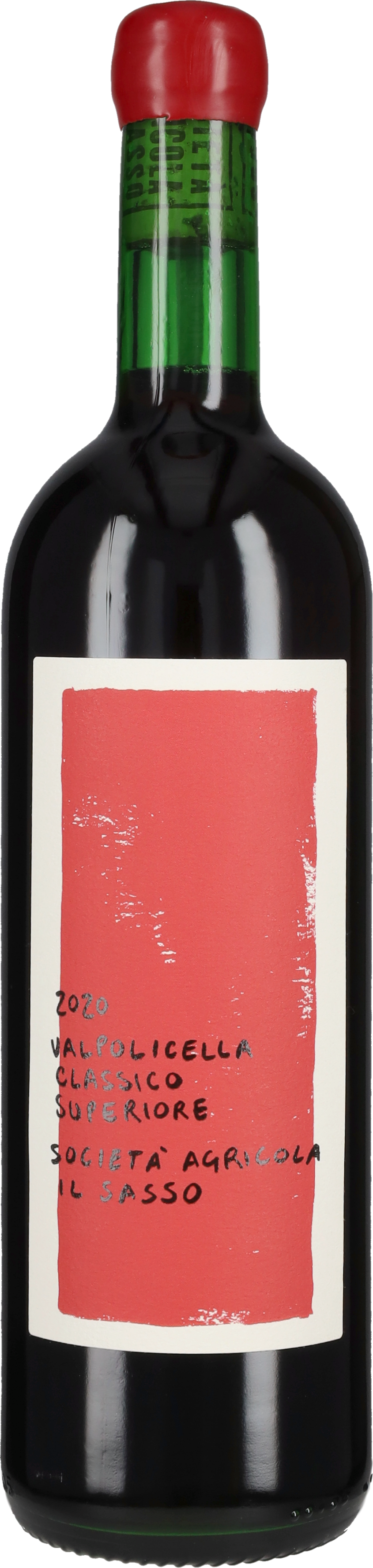
Valpolicella Classico Superiore Il Sasso 2020The Valpolicella Classico Superiore from the Veronese winery Il Sasso is a pure and sincere interpretation of the area. This young production reality, located in Montericco Negrar, a few kilometers north of Verona, manages about ten hectares of organic vineyards, with an agronomic approach aimed at promoting biodiversity and soil vitality. The term “Classico” identifies the historically most vocated area of the denomination, while the mention “Superiore” identifies a higher alcohol content compared to the minimum requirement established by the regulations for normal Valpolicella. Il Sasso Valpolicella Classico Superiore comes from a blend of the indigenous grape varieties Corvina, Corvinone, and Rondinella. The vineyards are located south of Negrar, at an altitude of 300 meters, on harsh soils with yellow calcarenite, a yellow sedimentary rock similar to tuff and rich in marine fossils. After harvesting and careful selection, the bunches are laid to rest for about a week in small crates and, in the meantime, a pied de cuve is prepared to start the alcoholic fermentation with only indigenous yeasts. The maceration on the skins lasts for about a month and the mass is then transferred to steel and concrete tanks for maturation for 12 months. Finally, the wine, without undergoing invasive filtration, is bottled, where it rests for at least another 6 months before release. To the eye, the red Valpolicella Classico Superiore Il Sasso presents a ruby red hue. The aromas on the nose range from notes of cherry, sour cherry, woodland spices, and underbrush, to pleasant wine sensations. On the palate, it is juicy and fragrant, fresh and with great territorial adherence. An artisanal label capable of seducing with its pronounced typicity and versatility in pairings.Cuve to initiate alcoholic fermentation with only indigenous yeasts. The maceration on the skins lasts for about a month and the mass is then transferred to steel and concrete tanks for 12 months of maturation. Finally, the wine, without undergoing invasive filtration, is bottled, where it rests for at least another 6 months before release. In appearance, the Valpolicella Classico Superiore Il Sasso shows a ruby red color. The aromas on the nose range from notes of cherry, sour cherry, woodland spices, and underbrush, to pleasant wine sensations. On the palate, it is juicy and fragrant, fresh and with great territorial adherence. An artisanal label capable of seducing with its marked typicity and versatility in pairings.25,00 £*Shipping: 48,00 £Secure redirect to the provider
-
Valpolicella Classico Viviani 2023The Valpolicella Classico by Viviani expresses the most youthful, versatile, straightforward, and fragrant character of the territory: an exceptional blend of modernity and territorial adherence. The tasting is indeed young and smooth, with a crunchy and easy-drinking sip, resulting from the processing carried out exclusively in steel of the indigenous grapes. It is a label that pairs perfectly with Mediterranean cuisine recipes, first courses, cold cuts, white meats, and even with flavorful fish dishes. It is the everyday red par excellence: simple and immediate but capable of delivering great satisfaction at the table, accompanying home cooking. This Valpolicella Classico Viviani originates from a blend of indigenous red grape varieties, where, alongside 70% Corvina Veronese, we find 30% Rondinella. The must obtained from the soft pressing of the grapes ferments spontaneously in steel containers thanks to the action of indigenous yeasts, in respect of the most authentic peasant traditions. The wine remains in steel to mature until February, and then further refines for two months directly in glass, after bottling. The Viviani Valpolicella Classico develops in the glass with a typically ruby color, crossed by light violet veins, evident at the rim. The nose is filled with fine and subtle aromas, announced with elegant fruity and spicy touches, enriched also by nuances of aromatic herbs. On the palate, it is easy-drinking, with a tasty and satisfying sip, relying on a tannic structure finely integrated into the overall structure. A Veneto red that, with this vintage, satisfies the main critics in the sector, not just Italian: considering the advantageous price, not tasting it would be a shame.9,00 £*Shipping: 48,00 £Secure redirect to the provider
-
When do you use il faut and il ne faut pas?
"Il faut" is used to express what is necessary or required, while "il ne faut pas" is used to express what is not allowed or should be avoided. For example, you would use "il faut" to say "il faut étudier pour réussir" (it is necessary to study to succeed), and "il ne faut pas" to say "il ne faut pas fumer dans ce lieu" (smoking is not allowed in this place). These expressions are used to give advice, make recommendations, or set rules. **
-
What is the difference between il faut que and il faut?
"Il faut" is used to express a general necessity or obligation, while "il faut que" is used to introduce a specific action or event that is necessary or required. For example, "il faut manger" means "it is necessary to eat" in a general sense, while "il faut que tu manges" means "you need to eat" in a specific sense. "Il faut" is used to make a general statement about what is necessary, while "il faut que" is used to specify what needs to be done. **
-
Why is it souhaite-t-il and not souhaite-s-il?
In French, the pronoun "il" (he) is combined with the verb "souhaiter" (to wish) to form the phrase "souhaite-t-il" because of the rule of verb inversion in interrogative sentences. When forming a question in French, the subject pronoun and the verb are inverted, so "souhaite-t-il" follows this rule. The "t" is added to create a liaison between the verb and the pronoun, making the pronunciation smoother. **
-
What are your tips for the German Classico?
To enjoy the German Classico, make sure to immerse yourself in the rich history and intense rivalry between Bayern Munich and Borussia Dortmund. Learn about the key players on both teams and their playing styles to appreciate the tactical battle on the field. Additionally, try to watch the match with friends or fellow fans to enhance the experience with lively discussions and friendly banter. Lastly, don't forget to savor the passion and excitement of one of the most anticipated matches in German football. **
Similar search terms for Valpolicella-Classico-Il-Sasso
-
Valpolicella Classico Speri 2025The Valpolicella Classico is the simplest wine with which the Speri winery tells us about the different facets of the Valpolicella terroir. In this label, fresh and light sensations dominate both on the nose and on the palate, enhanced by the choice made during vinification and aging, where only steel and vitrified cement are used, leaving wood aside. A bottle with a immediate profile, appealing also thanks to the final price at which it is offered, truly encouraging for those who want to start getting to know the Venetian reds. This Valpolicella Classico is born from a blend of indigenous red grape varieties from the Veneto region, specifically Corvina Veronese, Rondinella, and Molinara. These three varieties are cultivated by Speri using the traditional pergola system, in plots located near the municipalities of San Pietro in Cariano, Fumane, and Negrar. The must ferments in steel tanks at a constantly monitored temperature, while the subsequent malolactic fermentation takes place in vitrified cement tanks. It then matures in cement for a few months, until the bottling procedures begin. The Veneto wine Valpolicella Classico produced by the Speri winery presents itself to the eye with a beautiful ruby red color, crossed by slight more violet reflections, especially evident at the rim. The nose is winey, with aromas reminiscent of wildflowers and aromatic herbs, enriched in the finish by more balsamic and spicy notes. On the palate, it has a linear and clear entry, characterized by a fresh sip; it ends with an aftertaste marked by an almond flavor. A label that preserves the most immediate traits of the land from which it comes, perfect for accompanying culinary recipes of the Mediterranean tradition.12,00 £*Shipping: 48,00 £Secure redirect to the provider
-
Valpolicella Classico Secondo Marco 2022Il Valpolicella Classico firmato Secondo Marco è un vino rosso veneto dai tratti interessanti. Vi è infatti un bel connubio fra la leggerezza del profilo e l’anima complessa che si riscontra al naso e al palato, dove la beva è alimentata da una buona sapidità. Una bottiglia che va assaporata con attenzione per coglierne le differenti sfumature, che trasformano le tradizioni della Valpolicella in un qualcosa di più moderno e accattivante, capace di strizzare l’occhio anche dal punto di vista dell’immagine, con una grafica che, sull’etichetta, si afferma con originalità. Il Secondo Marco Valpolicella nasce da un taglio in cui, oltre a Corvina, Corvinone e Rondinella, ritroviamo anche altre uve a bacca rossa ammesse dal disciplinare. I grappoli vengono raccolti con attenzione durante la fase di vendemmia manuale, e dopo la diraspatura gli acini vengono pressati sofficemente. Il mosto fermenta macerando per circa due settimane a contatto con le bucce. Il vino matura per sei mesi in vasche di cemento, per poi essere trasferito in botti dalla capacità di 50 ettolitri, dove rimane per ulteriori sei mesi a riposare. Prima della messa in commercio vi è un ulteriore periodo di 3 mesi di affinamento trascorso in vetro. Il rosso Valpolicella Classico di Secondo Marco si palesa all’occhio con un colore rubino, caratterizzato da una particolare intensità. E’ la frutta ad affacciarsi per prima al naso, con note soprattutto di ciliegia, mentre sul finale le narici vengono circondate da tocchi più speziati. All’assaggio è di medio corpo, con un sorso caratterizzato da un gusto fresco e sapido, di buona bevibilità. Un’etichetta versatile in tavola, dove oltre ai classici abbinamenti con carni bianche e ricette di terra, si può sperimentare anche con i pesci in umido, cucinati con una base di pomodoro.18,00 £*Shipping: 48,00 £Secure redirect to the provider
-
Valpolicella Classico Corte Bravi 2024Corte Bravi Valpolicella Classico rappresenta una bottiglia in grado di esprimere il volto più accessibile e diretto del famoso areale da cui proviene. La Valpolicella è un esteso territorio situato a nord di Verona e suddivisibile in tre differenti sottozone, che da est verso ovest sono: la Valpolicella Orientale, la Valpolicella Valpantena e la Valpolicella Classica. Quest’ultima zona, dove si trova Corte Bravi, è quella più antica che ha dato origine alla denominazione e in cui risiedono le più celebri e storiche realtà vitivinicole. Sembra che il nome Valpolicella derivi dal latino “vallis-polis-cellae”, letteralmente “valle delle molte cantine”. Il Valpolicella Classico di Corte Bravi viene realizzato a partire da un blend di Corvinone (50%), Corvina Veronese (35%) e Rondinella (15%). Le vigne hanno un’età di circa 20 anni e sono allevate secondo i principi dell’agricoltura biologica attraverso il tradizionale sistema a pergola veronese. Per quanto riguarda l’aspetto pedologico, si tratta di terreni prevalentemente calcarei, ubicati a circa 200 metri di quota. Dopo la vendemmia manuale e l’attenta selezione, i grappoli vengono pigiati e il mosto così ricavato è fermentato in vasche d’acciaio a temperatura controllata grazie al solo intervento dei lieviti indigeni. Successivamente, il vino matura per un anno sempre in acciaio, dove svolge spontaneamente la fermentazione malolattica. Infine, l’imbottigliamento è eseguito senza previa filtrazione e il vino trascorre almeno altri 5 mesi in vetro prima di essere commercializzato. Rosso rubino dai riflessi amaranto è il colore del Valpolicella Classico Corte Bravi. L’olfatto offre sentori di frutti rossi come ciliegia e fragola, nonché note di fiori scuri freschi. Scorrevole, fresco e leggero in bocca, dove la piacevole sapidità contribuisce a renderlo assai beverino. Il finale insiste su sensazioni fruttate.13,00 £*Shipping: 48,00 £Secure redirect to the provider
-
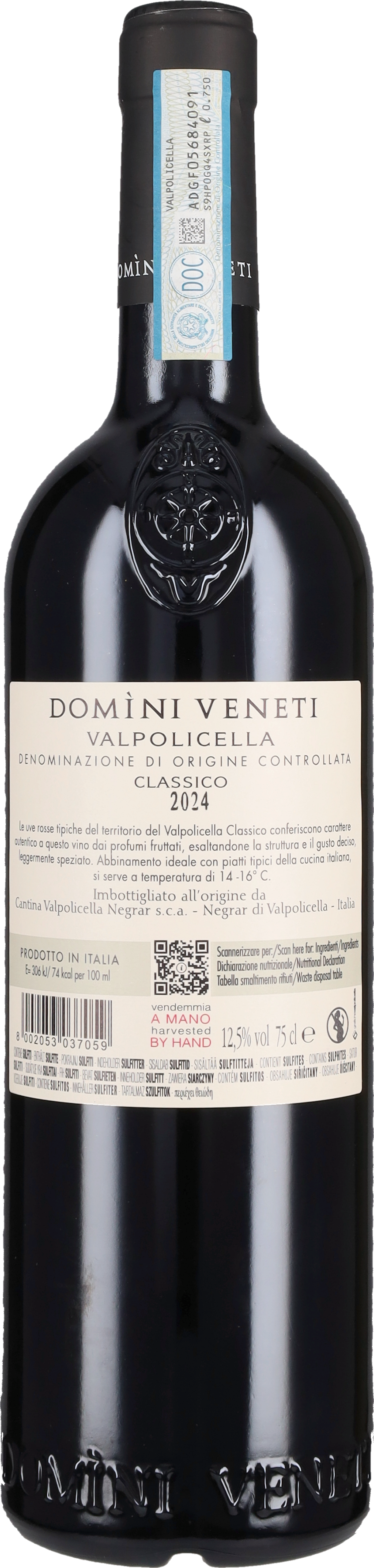
Valpolicella Classico Domini Veneti 2024Il Valpolicella Classico di Domìni Veneti è un rosso giovane e fragrante, che rappresenta il volto autentico della Valpolicella e della sua tradizione. È realizzato con le uve classiche del territorio Corvina, Corvinone e Rondinella, coltivate nel magnifico paesaggio collinare a nord della città di Verona, un’area famosa già nell’antichità per la qualità dei suoi vini. Terreni vocati e clima ideale, sono da sempre l’habitat perfetto per le uve a bacca rossa, che si esprimono con profili ricchi ed eleganti. La vinificazione solo in acciaio regala un vino snello e immediato, caratterizzato da fresche note fruttate. Il rosso Valpolicella Classico è una bella versione di questo tradizionale vino veronese, proposta da Domìni Veneti, il marchio di qualità della Cantina di Negrar. Come da antica e consolidata tradizione, è prodotto con le uve dei vitigni autoctoni a bacca rossa da secoli presenti nell’area del veronese. Le vigne di Corvina, Corvinone e Rondinella si trovano nella zona Classica della Valpolicella a un’altitudine compresa tra i 100 e i 250 metri sul livello de mare. I terreni di matrice calcareo-argillosa e un clima mite e ventilato, anche grazie alla vicinanza del Lago di Garda, favoriscono ottime maturazioni delle uve, con un perfetto equilibrio tra ricchezza aromatica e freschezza. Al termine della vendemmia manuale, si procede alla diraspatura e alla fermentazione in serbatoi d’acciaio inox a temperatura controllata. Il vino viene imbottigliato dopo un affinamento di qualche mese in acciaio, in modo che possa conservare intatta la vivacità esuberante degli aromi varietali delle uve. Il vino Valpolicella Classico di Domìni Veneti rappresenta la versione moderna e di qualità del vino quotidiano del territorio, da sempre presente sulle tavole veronesi. Nel calice si presenta di colore rosso rubino brillante e luminoso. La fragranza del bouquet conquista subito l’olfatto con profumi di ciliegia, piccoli frutti a bacca rossa, sfumature floreali e leggeri cenni speziati. Agile e scorrevole, è un rosso di medio corpo, con aromi delicati e croccanti, accompagnati da una trama tannica sottile. Il finale è limpido e teso, caratterizzato da una grande freschezza e da una chiusura piacevolmente sapida. L’essenza della Valpolicella nella sua espressione più schietta e autentica.10,00 £*Shipping: 48,00 £Secure redirect to the provider
-
How does "il faut" work in French?
"Il faut" is a common expression in French that is used to convey the idea of necessity or obligation. It is followed by an infinitive verb and is used to express what needs to be done or what is necessary in a given situation. For example, "Il faut manger" means "It is necessary to eat." This expression is used to give advice, make suggestions, or express general truths. **
-
What comes after il faudrait in French?
In French, "il faudrait" is followed by the infinitive form of a verb. This construction is used to express a suggestion or a polite request. For example, "il faudrait partir tôt" means "it would be necessary to leave early." **
-
What is an El, Sl, and Il?
An El, Sl, and Il are all suffixes used in the English language to form adjectives. "El" is used to form adjectives that mean "pertaining to" or "characterized by," such as in the word "musical." "Sl" is used to form adjectives that mean "tending to" or "inclined to," such as in the word "careful." "Il" is used to form adjectives that mean "having the nature of" or "capable of," such as in the word "flexible." These suffixes help to create new adjectives by modifying the meaning of the base word. **
-
What do the abbreviations el and il mean?
The abbreviation "el" typically stands for "elevated" and is commonly used in the context of transportation systems, such as an "el train" which refers to an elevated railway. On the other hand, "il" is often used as an abbreviation for "Illinois," which is a state in the United States. It can also be used as an abbreviation for "in-line" in various contexts, such as in sports or technology. **
* All prices are inclusive of VAT and, if applicable, plus shipping costs. The offer information is based on the details provided by the respective shop and is updated through automated processes. Real-time updates do not occur, so deviations can occur in individual cases. ** Note: Parts of this content were created by AI.