Buy saunameister.eu ?
We are moving the project
saunameister.eu .
Are you interested in purchasing the domain
saunameister.eu ?
domain@kv-gmbh.de · 0541-91531010
Buy saunameister.eu ?
'Motorcycle or electric motor?'
The choice between a motorcycle and an electric motor depends on individual preferences and needs. Motorcycles are typically more powerful and offer a traditional riding experience, while electric motors are more environmentally friendly and cost-effective to operate. If you prioritize speed and performance, a motorcycle may be the better option. However, if you are looking for a more sustainable and efficient mode of transportation, an electric motor could be the way to go. **
What is better: chainsaw motor or electric bike motor?
The answer to this question depends on the specific use case and the individual's preferences. A chainsaw motor is better for cutting down trees and other heavy-duty outdoor tasks, while an electric bike motor is better for transportation and recreational purposes. Chainsaw motors are powerful and designed for heavy-duty work, while electric bike motors are more efficient and environmentally friendly for commuting and leisure activities. Ultimately, the better option depends on the intended use and the user's priorities. **


Similar search terms for VEMO-V46-01-1312-Electric-Motor
Top-Angebote
Products related to VEMO-V46-01-1312-Electric-Motor:
-
VEMO V30-01-1629 Electric Motor, radiator fanVoltage [V]: 12; Supplementary Article / Supplementary Info Info 2: with holding frame; Construction Year from: 07/2006; Vehicle Equipment: for vehicles without trailer hitch; Construction Year to: 12/2009, 04/2009, 09/2009; Rated Power [W]: 400338,99 £*Shipping: 1,99 £Secure redirect to the provider
-
VEMO V46-07-0001 Wiper motorVoltage [V]: 12; Fitting Position: Front; Weight [kg]: 1,1; Packaging width [cm]: 25,9; Packaging height [cm]: 10,6; Packaging Depth [cm]: 9,8; Supplementary Info: Original VEMO Quality; Number of Doors: 3-phase; Construction Year from: 07/1996, 08/1994, 09/1996, 09/2004; Construction Year to: 08/1998; Number of Doors: 383,99 £*Shipping: 8,45 £Secure redirect to the provider
-
VEMO V46-07-0026 Wiper motorFitting Position: Rear; Number of pins: 3; Voltage [V]: 12; Fastening Type: 3-point attachment; TecDoc Engine Number: 35586, 28005, 34129, 32304, 31427, 32301, 34443, 34590, 35373; Fabrication Number: A...; Production date to: 16.03.2016; Production Number: I..., J..., L..., M..., S..., T..., W...211,99 £*Shipping: 1,99 £Secure redirect to the provider


-
What is the difference between a 36V electric motor and a 48V electric motor?
The main difference between a 36V electric motor and a 48V electric motor is the voltage at which they operate. A 48V electric motor will generally be more powerful and capable of higher speeds and torque compared to a 36V motor. This means that a 48V motor is suitable for heavier loads or more demanding applications, while a 36V motor may be better suited for lighter duty tasks. Additionally, a 48V motor may require a larger and more powerful battery to operate, while a 36V motor can typically use a smaller and lighter battery. **
-
How does an electric motor work?
An electric motor works by converting electrical energy into mechanical energy. When an electric current flows through a wire that is placed in a magnetic field, it creates a force that causes the wire to move. This movement is then transferred to a shaft, which rotates and powers the mechanical device connected to the motor. The direction of the rotation can be controlled by changing the direction of the electric current or by reversing the polarity of the magnetic field. **
-
How to disassemble an electric motor?
To disassemble an electric motor, start by disconnecting the power source and removing any covers or housing that may be protecting the motor. Next, carefully remove the bolts or screws that are holding the motor together. Once the motor is open, take note of the arrangement of the components and carefully remove them one by one. Be sure to keep track of where each part goes to ensure proper reassembly. **
-
Can an electric motor be tuned?
Yes, an electric motor can be tuned to optimize its performance. This tuning process involves adjusting various parameters such as voltage, current, and frequency to achieve the desired speed, torque, and efficiency. By fine-tuning these parameters, the motor can operate more efficiently and effectively for specific applications. Additionally, advanced technologies such as sensor feedback and control algorithms can be used to further enhance the motor's performance through tuning. **

What is an electric motor overcurrent?
An electric motor overcurrent occurs when the current flowing through the motor exceeds its rated capacity. This can happen due to various reasons such as a sudden increase in load, a fault in the motor or its control system, or a short circuit. Overcurrent can lead to overheating of the motor, damage to its windings, and ultimately, failure of the motor. To protect the motor from overcurrent, protective devices such as fuses, circuit breakers, and overload relays are used to interrupt the current flow and prevent damage to the motor. **
Can every electric motor generate electricity?
No, not every electric motor can generate electricity. Only certain types of electric motors, such as permanent magnet motors or regenerative braking systems in electric vehicles, have the capability to generate electricity. These motors can convert mechanical energy into electrical energy through the process of electromagnetic induction. However, traditional electric motors, such as those found in household appliances or industrial machinery, are designed to only consume electricity to produce mechanical energy and cannot generate electricity. **
Top-Angebote
Products related to VEMO-V46-01-1312-Electric-Motor:
-
VEMO V46-01-1312 Electric Motor, radiator fanVoltage [V]: 12; Operating Mode: Electric; Weight [kg]: 0,736; Packaging width [cm]: 12,7; Packaging height [cm]: 11,1; Packaging Depth [cm]: 15,1; Product line: Original Quality; TecDoc Engine Number: 3097, 3161, 3249, 3102, 4863, 3234, 3129, 3221, 3088, 5064, 3176, 3257, 3224, 3254, 3222, 3347, 3349, 3256, 3344, 3370, 3337, 3367, 3447, 3109, 3280, 3212, 3273, 3268, 3238, 3239, 3351, 3154, 3444, 3250, 3128, 3179, 3100, 3099, 3242, 3267, 3098, 3194, 3123, 5054, 3078, 3183, 3153, 4869, 3288, 3303, 3387, 12730, 14314, 3261, 17282, 3184, 3196, 3228, 3181, 4862, 3371, 3350, 3284, 3106, 3348, 3236, 5055; Vehicle Equipment: for vehicles without air conditioning, for vehicles with air conditioning (manually controlled), for vehicles with/without air conditioning, for vehicles without power steering; Construction Year to: 08/1990, 12/1992, 12/1988, 09/1986, 06/1983, 06/1984, 04/1993, 04/1992, 03/1993, 05/1988, 08/1991, 02/1998, 02/1996, 11/1995, 09/1988, 11/1992, 12/1984, 06/1986, 12/1991, 08/1995, 06/1985, 03/1992, 06/1987, 02/1989, 12/1986; Construction Year from: 10/1981, 03/1979, 03/1982, 04/1989, 09/1986, 06/1987, 06/1990, 06/1989, 09/1985, 03/1996, 09/1990, 03/1991, 05/1992, 06/1988, 09/1984, 07/1980, 07/1988, 05/1987, 07/1983, 07/1985, 07/1984, 09/1983, 07/1981, 06/1985, 08/1990, 01/1987, 01/1994, 04/1991, 10/1987, 12/1994, 07/1986; Engine Code: C2J.7.94,C2J.7.95, C2J.7.97, C2J.7.66, F2N.7.97, C3J.7.00, C2J.7.17-G, F2N.7.00-G, A5L.7.17, A2M.7.95, C2J.7.76, F3N.7.26, F3N.7.23, J7T.7.30,J7T.7.31, C3J.7.60, F8Q.7.32, E7J.7.54, C1G.7.22, J7R.7.50,J7R.7.51, E6J.7.18,E7J.6.01, E7F.7.04,E7F.7.08, J6R.7.93, C1C.7.08, C2J.7.69, E7J.7.57, 688.7.12, S8U.7.31, E6J.7.18; Vehicle Identification Number (VIN) from: 941229, 870115; Transmission Type: Manual Transmission109,99 £*Shipping: 8,45 £Secure redirect to the provider
-
VEMO V24-01-1312 Fan, radiatorHeating/Cooling: Single Fan; Supplementary Article / Supplementary Info Info 2: with radiator fan shroud; Supplementary Article / Supplementary Info Info 2: not for dusty operating conditions; Rated Power [W]: 300; Voltage [V]: 12; Diameter: 405; Vehicle Equipment: for vehicles without air conditioning; for model year: 2012, 2013, 2014, 2015; Emissions Standard: Euro 6, Euro 4/Euro 568,49 £*Shipping: 8,45 £Secure redirect to the provider
-
VEMO V30-01-1629 Electric Motor, radiator fanVoltage [V]: 12; Supplementary Article / Supplementary Info Info 2: with holding frame; Construction Year from: 07/2006; Vehicle Equipment: for vehicles without trailer hitch; Construction Year to: 12/2009, 04/2009, 09/2009; Rated Power [W]: 400338,99 £*Shipping: 1,99 £Secure redirect to the provider
-
VEMO V46-07-0001 Wiper motorVoltage [V]: 12; Fitting Position: Front; Weight [kg]: 1,1; Packaging width [cm]: 25,9; Packaging height [cm]: 10,6; Packaging Depth [cm]: 9,8; Supplementary Info: Original VEMO Quality; Number of Doors: 3-phase; Construction Year from: 07/1996, 08/1994, 09/1996, 09/2004; Construction Year to: 08/1998; Number of Doors: 383,99 £*Shipping: 8,45 £Secure redirect to the provider
-
'Motorcycle or electric motor?'
The choice between a motorcycle and an electric motor depends on individual preferences and needs. Motorcycles are typically more powerful and offer a traditional riding experience, while electric motors are more environmentally friendly and cost-effective to operate. If you prioritize speed and performance, a motorcycle may be the better option. However, if you are looking for a more sustainable and efficient mode of transportation, an electric motor could be the way to go. **
-
What is better: chainsaw motor or electric bike motor?
The answer to this question depends on the specific use case and the individual's preferences. A chainsaw motor is better for cutting down trees and other heavy-duty outdoor tasks, while an electric bike motor is better for transportation and recreational purposes. Chainsaw motors are powerful and designed for heavy-duty work, while electric bike motors are more efficient and environmentally friendly for commuting and leisure activities. Ultimately, the better option depends on the intended use and the user's priorities. **
-
What is the difference between a 36V electric motor and a 48V electric motor?
The main difference between a 36V electric motor and a 48V electric motor is the voltage at which they operate. A 48V electric motor will generally be more powerful and capable of higher speeds and torque compared to a 36V motor. This means that a 48V motor is suitable for heavier loads or more demanding applications, while a 36V motor may be better suited for lighter duty tasks. Additionally, a 48V motor may require a larger and more powerful battery to operate, while a 36V motor can typically use a smaller and lighter battery. **
-
How does an electric motor work?
An electric motor works by converting electrical energy into mechanical energy. When an electric current flows through a wire that is placed in a magnetic field, it creates a force that causes the wire to move. This movement is then transferred to a shaft, which rotates and powers the mechanical device connected to the motor. The direction of the rotation can be controlled by changing the direction of the electric current or by reversing the polarity of the magnetic field. **
Similar search terms for VEMO-V46-01-1312-Electric-Motor
-
VEMO V46-07-0026 Wiper motorFitting Position: Rear; Number of pins: 3; Voltage [V]: 12; Fastening Type: 3-point attachment; TecDoc Engine Number: 35586, 28005, 34129, 32304, 31427, 32301, 34443, 34590, 35373; Fabrication Number: A...; Production date to: 16.03.2016; Production Number: I..., J..., L..., M..., S..., T..., W...211,99 £*Shipping: 1,99 £Secure redirect to the provider
-
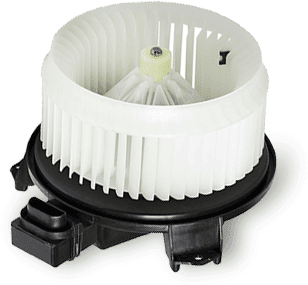
VEMO V46-03-1388 Blower motorDiameter: 146; Rated Voltage [V]: 12; Voltage [V]: 12; New Part: ; Supplementary Info: Q+, original equipment manufacturer quality; Construction Year to: 12/2012, 03/2011, 10/2011, 08/2011, 12/2007, 11/2010, 01/2010; Construction Year from: 11/2010, 06/2005, 01/200966,99 £*Shipping: 8,45 £Secure redirect to the provider
-
VEMO V46-79-0025 Blower motor regulatorVoltage [V]: 12; Cable Length [mm]: 970; Vehicle Equipment: for vehicles without air conditioning, for vehicles with air conditioning (manually controlled); Number of pins: 9; Supplementary Article / Supplementary Info Info 2: with cable; Weight [kg]: 0,148; Packaging width [cm]: 5,7; Packaging height [cm]: 12,85; Packaging Depth [cm]: 12,85; Supplementary Info: Original VEMO Quality40,49 £*Shipping: 8,45 £Secure redirect to the provider
-
How to disassemble an electric motor?
To disassemble an electric motor, start by disconnecting the power source and removing any covers or housing that may be protecting the motor. Next, carefully remove the bolts or screws that are holding the motor together. Once the motor is open, take note of the arrangement of the components and carefully remove them one by one. Be sure to keep track of where each part goes to ensure proper reassembly. **
-
Can an electric motor be tuned?
Yes, an electric motor can be tuned to optimize its performance. This tuning process involves adjusting various parameters such as voltage, current, and frequency to achieve the desired speed, torque, and efficiency. By fine-tuning these parameters, the motor can operate more efficiently and effectively for specific applications. Additionally, advanced technologies such as sensor feedback and control algorithms can be used to further enhance the motor's performance through tuning. **
-
What is an electric motor overcurrent?
An electric motor overcurrent occurs when the current flowing through the motor exceeds its rated capacity. This can happen due to various reasons such as a sudden increase in load, a fault in the motor or its control system, or a short circuit. Overcurrent can lead to overheating of the motor, damage to its windings, and ultimately, failure of the motor. To protect the motor from overcurrent, protective devices such as fuses, circuit breakers, and overload relays are used to interrupt the current flow and prevent damage to the motor. **
-
Can every electric motor generate electricity?
No, not every electric motor can generate electricity. Only certain types of electric motors, such as permanent magnet motors or regenerative braking systems in electric vehicles, have the capability to generate electricity. These motors can convert mechanical energy into electrical energy through the process of electromagnetic induction. However, traditional electric motors, such as those found in household appliances or industrial machinery, are designed to only consume electricity to produce mechanical energy and cannot generate electricity. **
* All prices are inclusive of VAT and, if applicable, plus shipping costs. The offer information is based on the details provided by the respective shop and is updated through automated processes. Real-time updates do not occur, so deviations can occur in individual cases. ** Note: Parts of this content were created by AI.