Buy saunameister.eu ?
We are moving the project
saunameister.eu .
Are you interested in purchasing the domain
saunameister.eu ?
domain@kv-gmbh.de · 0541-91531010
Buy saunameister.eu ?
How do you heat PTC?
PTC (Positive Temperature Coefficient) heating elements can be heated by passing an electric current through them. When an electric current is applied, the resistance of the PTC material increases, causing it to heat up. This self-regulating property makes PTC heating elements efficient and safe for various applications such as heating pads, automotive heaters, and hair dryers. The amount of heat produced can be controlled by adjusting the voltage or current supplied to the PTC element. **
What is the Playmobil train 4017?
The Playmobil train 4017 is a toy train set produced by the German company Playmobil. It is a battery-operated train that comes with tracks, a locomotive, passenger cars, and various accessories. The train set is designed for children to play with and allows them to create their own train adventures. It is a popular toy for kids who are interested in trains and imaginative play. **


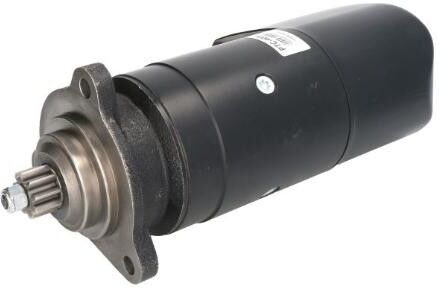
Similar search terms for POWER-TRUCK-PTC-4017-Starter
Top-Angebote
Products related to POWER-TRUCK-PTC-4017-Starter:
-
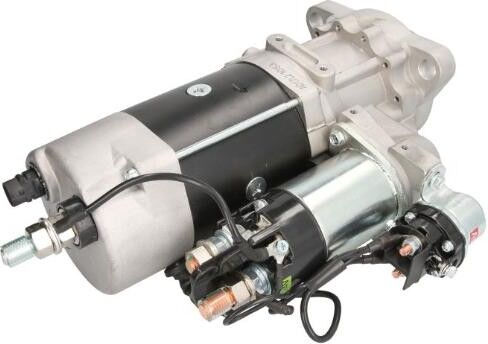
POWER TRUCK PTC-4153 Starter motorVoltage [V]: 24; Rated Power [kW]: 7,5; Rotation Direction: Clockwise rotation; Flange Diameter [mm]: 92; Number of Teeth: 11; Number of mounting bores: 3; Number of threaded holes: 0; Pinion Rest Position [mm]: 47; Guarantee: 2 years guarantee; Exchange Part: ; Engine Code: MACKE.TECHA/46, MACKE.TECHB/46, MACKE.TECHC/46208,99 £*Shipping: 1,99 £Secure redirect to the provider
-
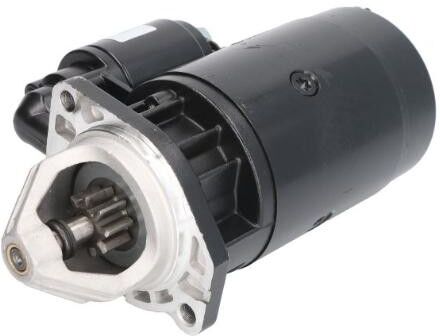
POWER TRUCK PTC-4038 Starter motorExchange Part: ; Rated Voltage [V]: 24; Rated Power [kW]: 5,5; Number of mounting bores: 3; Number of threaded holes: 0; Number of Teeth: 11; Flange Diameter [mm]: 89; Rotation Direction: Clockwise rotation; Pinion Rest Position [mm]: 48,2; Construction Year to: 08/2005, 07/2009; Construction Year from: 03/2002, 09/2005, 06/2006; TecDoc Engine Number: 18979; Engine Code: D9B310200,99 £*Shipping: 1,99 £Secure redirect to the provider


-
Where does the starter get power from?
The starter in a vehicle gets power from the vehicle's battery. When the ignition key is turned, the battery sends an electrical current to the starter motor, which then cranks the engine to start the vehicle. The starter relies on the battery to provide the necessary power to initiate the engine's combustion process. **
-
Does the starter motor not receive power?
If the starter motor is not receiving power, it could be due to a few different issues. First, check the battery to ensure it is fully charged and functioning properly. If the battery is fine, then the issue may be with the starter solenoid or the ignition switch. It's also possible that there is a problem with the wiring or connections leading to the starter motor. It's best to have a professional mechanic diagnose and repair the issue to ensure the problem is properly addressed. **
-
How can you start a truck with a 12V jump starter?
To start a truck with a 12V jump starter, first, ensure that the jump starter is fully charged. Then, connect the positive (+) clamp of the jump starter to the positive terminal of the truck's battery and the negative (-) clamp to a metal, unpainted part of the truck's engine block. Once the connections are secure, turn on the jump starter and attempt to start the truck. If the truck does not start, wait a few minutes and try again. Once the truck is running, disconnect the jump starter and let the truck's engine run for a few minutes to recharge the battery. **
-
Where does the starter get its power from?
The starter in a vehicle gets its power from the battery. When the ignition key is turned, the battery sends an electrical current to the starter motor, which then cranks the engine to start the vehicle. If the battery is weak or dead, the starter may not have enough power to turn the engine over. **

What are six alternative options for PTC KTY11?
1. NTC thermistors: These are negative temperature coefficient thermistors that have a resistance that decreases as temperature increases. They can be used as an alternative to PTC KTY11 in temperature sensing applications. 2. RTD sensors: Resistance temperature detectors are another alternative to PTC KTY11. They are made of pure metals or metal alloys and their resistance changes with temperature. 3. Thermocouples: These are temperature sensors that consist of two different conductors that produce a voltage proportional to the temperature difference between the ends. They are commonly used in industrial and scientific applications. 4. Infrared sensors: These sensors detect temperature by measuring the infrared radiation emitted by an object. They can be used as an alternative to contact-based temperature sensors like PTC KTY11. 5. IC temperature sensors: Integrated circuit temperature sensors are small, low-cost sensors that can be used to measure temperature in electronic devices and systems. 6. Fiber optic sensors: These sensors use optical fibers to measure **
What is the resistor value for the IC 4017?
The resistor value for the IC 4017 is typically around 10k ohms. This resistor is commonly used in conjunction with the IC 4017 to set the timing and frequency of the output signals. It helps control the speed at which the IC cycles through its various output states. Different applications may require slightly different resistor values, but 10k ohms is a common starting point. **
Top-Angebote
Products related to POWER-TRUCK-PTC-4017-Starter:
-
POWER TRUCK PTC-4096 Starter motorRated Voltage [V]: 24; Rated Power [kW]: 8,4; Number of mounting bores: 3; Number of threaded holes: 0; Number of Teeth: 11; Clamp: 30, 85, 50, 31; Flange Diameter [mm]: 92; Rotation Direction: Clockwise rotation; Pinion Rest Position [mm]: 43; Starter Type: Floating pinion; Bore Diameter [mm]: 16,5; Bore Diameter 2 [mm]: 16,5; Bore Ø 3 [mm]: 16,5; Length [mm]: 365,6; Position/Degree: rechts; Mounting Angle [degrees]: 58; Mounting bore angle measurement [degree]: 58; Voltage [V]: 24; Construction Year from: 09/1991, 07/1992, 10/1991; Construction Year to: 07/2000, 08/2000; TecDoc Engine Number: 10487; Engine Code: 8360.46...116,99 £*Shipping: 1,99 £Secure redirect to the provider
-
POWER TRUCK PTC-4153 Starter motorVoltage [V]: 24; Rated Power [kW]: 7,5; Rotation Direction: Clockwise rotation; Flange Diameter [mm]: 92; Number of Teeth: 11; Number of mounting bores: 3; Number of threaded holes: 0; Pinion Rest Position [mm]: 47; Guarantee: 2 years guarantee; Exchange Part: ; Engine Code: MACKE.TECHA/46, MACKE.TECHB/46, MACKE.TECHC/46208,99 £*Shipping: 1,99 £Secure redirect to the provider
-
How do you heat PTC?
PTC (Positive Temperature Coefficient) heating elements can be heated by passing an electric current through them. When an electric current is applied, the resistance of the PTC material increases, causing it to heat up. This self-regulating property makes PTC heating elements efficient and safe for various applications such as heating pads, automotive heaters, and hair dryers. The amount of heat produced can be controlled by adjusting the voltage or current supplied to the PTC element. **
-
What is the Playmobil train 4017?
The Playmobil train 4017 is a toy train set produced by the German company Playmobil. It is a battery-operated train that comes with tracks, a locomotive, passenger cars, and various accessories. The train set is designed for children to play with and allows them to create their own train adventures. It is a popular toy for kids who are interested in trains and imaginative play. **
-
Where does the starter get power from?
The starter in a vehicle gets power from the vehicle's battery. When the ignition key is turned, the battery sends an electrical current to the starter motor, which then cranks the engine to start the vehicle. The starter relies on the battery to provide the necessary power to initiate the engine's combustion process. **
-
Does the starter motor not receive power?
If the starter motor is not receiving power, it could be due to a few different issues. First, check the battery to ensure it is fully charged and functioning properly. If the battery is fine, then the issue may be with the starter solenoid or the ignition switch. It's also possible that there is a problem with the wiring or connections leading to the starter motor. It's best to have a professional mechanic diagnose and repair the issue to ensure the problem is properly addressed. **
Similar search terms for POWER-TRUCK-PTC-4017-Starter
-
POWER TRUCK PTC-4038 Starter motorExchange Part: ; Rated Voltage [V]: 24; Rated Power [kW]: 5,5; Number of mounting bores: 3; Number of threaded holes: 0; Number of Teeth: 11; Flange Diameter [mm]: 89; Rotation Direction: Clockwise rotation; Pinion Rest Position [mm]: 48,2; Construction Year to: 08/2005, 07/2009; Construction Year from: 03/2002, 09/2005, 06/2006; TecDoc Engine Number: 18979; Engine Code: D9B310200,99 £*Shipping: 1,99 £Secure redirect to the provider
-
How can you start a truck with a 12V jump starter?
To start a truck with a 12V jump starter, first, ensure that the jump starter is fully charged. Then, connect the positive (+) clamp of the jump starter to the positive terminal of the truck's battery and the negative (-) clamp to a metal, unpainted part of the truck's engine block. Once the connections are secure, turn on the jump starter and attempt to start the truck. If the truck does not start, wait a few minutes and try again. Once the truck is running, disconnect the jump starter and let the truck's engine run for a few minutes to recharge the battery. **
-
Where does the starter get its power from?
The starter in a vehicle gets its power from the battery. When the ignition key is turned, the battery sends an electrical current to the starter motor, which then cranks the engine to start the vehicle. If the battery is weak or dead, the starter may not have enough power to turn the engine over. **
-
What are six alternative options for PTC KTY11?
1. NTC thermistors: These are negative temperature coefficient thermistors that have a resistance that decreases as temperature increases. They can be used as an alternative to PTC KTY11 in temperature sensing applications. 2. RTD sensors: Resistance temperature detectors are another alternative to PTC KTY11. They are made of pure metals or metal alloys and their resistance changes with temperature. 3. Thermocouples: These are temperature sensors that consist of two different conductors that produce a voltage proportional to the temperature difference between the ends. They are commonly used in industrial and scientific applications. 4. Infrared sensors: These sensors detect temperature by measuring the infrared radiation emitted by an object. They can be used as an alternative to contact-based temperature sensors like PTC KTY11. 5. IC temperature sensors: Integrated circuit temperature sensors are small, low-cost sensors that can be used to measure temperature in electronic devices and systems. 6. Fiber optic sensors: These sensors use optical fibers to measure **
-
What is the resistor value for the IC 4017?
The resistor value for the IC 4017 is typically around 10k ohms. This resistor is commonly used in conjunction with the IC 4017 to set the timing and frequency of the output signals. It helps control the speed at which the IC cycles through its various output states. Different applications may require slightly different resistor values, but 10k ohms is a common starting point. **
* All prices are inclusive of VAT and, if applicable, plus shipping costs. The offer information is based on the details provided by the respective shop and is updated through automated processes. Real-time updates do not occur, so deviations can occur in individual cases. ** Note: Parts of this content were created by AI.