Buy saunameister.eu ?
We are moving the project
saunameister.eu .
Are you interested in purchasing the domain
saunameister.eu ?
domain@kv-gmbh.de · 0541-91531010
Buy saunameister.eu ?
What is the difference between a power take-off shaft and a drive shaft?
A power take-off (PTO) shaft is a type of drive shaft that transfers power from a vehicle's engine to an attachment or implement, such as a pump or generator. The main difference between a PTO shaft and a regular drive shaft is that a PTO shaft is specifically designed to transfer power to external equipment, while a drive shaft is typically used to transfer power within a vehicle's transmission or between different components of a vehicle. Additionally, PTO shafts are often detachable and can be connected and disconnected as needed, whereas a drive shaft is a permanent component of a vehicle's drivetrain. **
Why are there no simple motorcycles with shaft drive or belt drive?
There are no simple motorcycles with shaft drive or belt drive because these systems are more complex and expensive to manufacture compared to chain drive systems. Chain drives are simpler, lighter, and more cost-effective, making them the preferred choice for most motorcycles. Additionally, chain drives offer easier maintenance and customization options, which are important factors for many motorcycle enthusiasts. Overall, the simplicity and efficiency of chain drives make them the more popular choice in the motorcycle industry. **

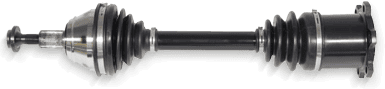
Similar search terms for MAXGEAR-49-1880-Drive-shaft
Top-Angebote
Products related to MAXGEAR-49-1880-Drive-shaft:
-
MAXGEAR 49-0478 Drive shaftFitting Position: Front Axle Left, Front Axle Right; External Toothing wheel side: 38; Internal Toothing wheel side: 27; Length [mm]: 540; Number of Teeth, ABS ring: 48; New part without deposit: ; Vehicle Identification Number (VIN) from: 70-S-000001, 70S000001; Vehicle Identification Number (VIN) to: 70-T-199999; Transmission Type: Fully Automatic155,99 £*Shipping: 1,99 £Secure redirect to the provider
-
MAXGEAR 49-2373 Drive shaftFitting Position: Front Axle Right; External Toothing differential side: 36; External Toothing wheel side: 28; Supplementary Article / Supplementary Info Info 2: with bearing(s); Length [mm]: 1057; Length 2 [mm]: 308; Transmission-sided joint diameter [mm]: 106; Wheel-sided joint diameter [mm]: 91; ABS-Ring Diameter [mm]: 105; Number of Teeth, ABS ring: 48; Construction Year from: 05/2004, 07/2003, 06/2004; Vehicle type: Transit260, Transit280, Transit300, Transit330, Transit350; Braking/Driving Dynamics: for vehicles with ABS; Transmission Type: Manual Transmission; Construction Year to: 03/2004171,99 £*Shipping: 1,99 £Secure redirect to the provider
-
MAXGEAR 49-2262 Drive shaftExternal Toothing wheel side: 38; Length [mm]: 603, 525; Diameter 2 [mm]: 124; Fitting Position: Front Axle Left; Transmission Type: 6-Speed Automatic Transmission, Automatic Transmission, 6-Speed Manual Transmission211,99 £*Shipping: 1,99 £Secure redirect to the provider
-
MAXGEAR 49-2588 Drive shaftExternal Toothing wheel side: 28; Internal Gearing Differential Side (transmission connection): 26; Length [mm]: 595; Transmission-sided joint diameter [mm]: 75; Wheel-sided joint diameter [mm]: 82; Construction Year from: 03/2006; Fitting Position: Front Axle Right; Transmission Type: 5-Speed Manual Transmission, 4-Speed Automatic Transmission91,49 £*Shipping: 8,45 £Secure redirect to the provider


-
How to calculate the moment of inertia of the drive shaft?
To calculate the moment of inertia of the drive shaft, you need to know the mass of the shaft and its distribution along its length. The moment of inertia can be calculated using the formula I = ∫r^2 dm, where r is the distance from the axis of rotation to the element of mass dm. By integrating this formula over the entire length of the shaft, you can determine the moment of inertia of the drive shaft. Alternatively, you can also use the parallel axis theorem to calculate the moment of inertia if the shaft is not rotating about its center of mass. **
-
What was the Socialist Law of 1880?
The Socialist Law of 1880 was a repressive legislation enacted by the German government under Chancellor Otto von Bismarck to suppress the growing socialist movement in the country. The law aimed to outlaw the Social Democratic Party of Germany and other socialist organizations, as well as to restrict their activities, including banning their publications and public meetings. It also allowed for the expulsion of socialist agitators and the suppression of socialist ideas. The law was part of Bismarck's efforts to combat the socialist movement and maintain the existing social and political order in Germany. **
-
How do you calculate the moment of inertia of the drive shaft?
The moment of inertia of a drive shaft can be calculated using the formula for the moment of inertia of a solid cylinder, which is \( I = \frac{1}{2} m r^2 \), where \( m \) is the mass of the shaft and \( r \) is the radius of the shaft. If the drive shaft is not a solid cylinder, the moment of inertia can be calculated by summing the moments of inertia of its individual components using the parallel axis theorem. This involves calculating the moment of inertia of each component about its own center of mass and then adding the mass of each component multiplied by the square of the distance between its center of mass and the axis of rotation. **
-
How did a school day in 1880 unfold?
In 1880, a school day typically began with the ringing of a bell to signal the start of classes. Students would gather in a single classroom, often with students of different ages and grade levels. The teacher would lead the class in reciting the Pledge of Allegiance and then proceed with lessons in reading, writing, arithmetic, and other subjects. There were limited resources and textbooks, so teaching methods relied heavily on rote memorization, repetition, and recitation. The school day would include a short break for lunch, and then continue with more lessons until the end of the day. **

What is the historical background from 1880 to 1900?
The period from 1880 to 1900 was marked by significant changes and developments in various aspects of history. This era saw the rise of industrialization and urbanization, leading to rapid economic growth and technological advancements. It was also a time of imperialism, with European powers expanding their empires through colonization and conquest. Additionally, this period witnessed social and political movements, such as the labor movement and the women's suffrage movement, as well as the emergence of new artistic and intellectual movements, including Impressionism and the beginning of the modernist literary movement. Overall, the historical background from 1880 to 1900 was characterized by profound transformations in society, economy, politics, and culture. **
What about the shaft?
The shaft is a long, narrow part of a structure or object that typically provides support or serves as a passageway. In the context of machinery or equipment, the shaft is often used to transmit power or motion from one part to another. It is important to ensure that the shaft is properly aligned, lubricated, and maintained to prevent wear and damage, which can lead to equipment failure. **
Top-Angebote
Products related to MAXGEAR-49-1880-Drive-shaft:
-
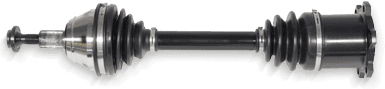
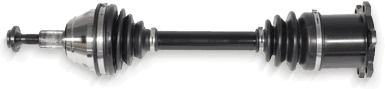
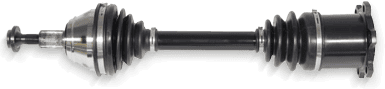
MAXGEAR 49-1880 Drive shaftFitting Position: Front Axle Right; Fitting Position: Rear Axle Right; External Toothing wheel side: 27; Length [mm]: 667; Transmission-sided joint diameter [mm]: 95,6; Wheel-sided joint diameter [mm]: 84; ABS-Ring Diameter [mm]: 83; Number of Teeth, ABS ring: 48; Number of bores: 6; Bolt Hole Circle Ø [mm]: 80; Construction Year from: 09/2009, 01/2006; Vehicle Equipment Line/Trim Level: N43B16A; Transmission Type: Fully Automatic, Manual Transmission, Automatic Transmission; Transmission Code: S205A; Left-/right-hand drive vehicles: for right-hand drive vehicles; Construction Year to: 09/2005; not for engine code: N46B20BD137,99 £*Shipping: 1,99 £Secure redirect to the provider
-
MAXGEAR 49-0310 Drive shaftFitting Position: Front Axle; Fitting Position: Front Axle Left; External Toothing wheel side: 25; Length [mm]: 593; Diameter 1 [mm]: 88; Number of Teeth, ABS ring: 29; Transmission Type: Manual Transmission; Transmission Code: BE1/3, BE3, 4HP14; Braking/Driving Dynamics: for vehicles with ABS, for vehicles without ABS; Construction Year from: 01/1994, 07/1996, 07/1997, 01/1998, 01/1986; Construction Year to: 12/1997, 11/2007, 12/199371,49 £*Shipping: 8,45 £Secure redirect to the provider
-
MAXGEAR 49-0478 Drive shaftFitting Position: Front Axle Left, Front Axle Right; External Toothing wheel side: 38; Internal Toothing wheel side: 27; Length [mm]: 540; Number of Teeth, ABS ring: 48; New part without deposit: ; Vehicle Identification Number (VIN) from: 70-S-000001, 70S000001; Vehicle Identification Number (VIN) to: 70-T-199999; Transmission Type: Fully Automatic155,99 £*Shipping: 1,99 £Secure redirect to the provider
-
MAXGEAR 49-2373 Drive shaftFitting Position: Front Axle Right; External Toothing differential side: 36; External Toothing wheel side: 28; Supplementary Article / Supplementary Info Info 2: with bearing(s); Length [mm]: 1057; Length 2 [mm]: 308; Transmission-sided joint diameter [mm]: 106; Wheel-sided joint diameter [mm]: 91; ABS-Ring Diameter [mm]: 105; Number of Teeth, ABS ring: 48; Construction Year from: 05/2004, 07/2003, 06/2004; Vehicle type: Transit260, Transit280, Transit300, Transit330, Transit350; Braking/Driving Dynamics: for vehicles with ABS; Transmission Type: Manual Transmission; Construction Year to: 03/2004171,99 £*Shipping: 1,99 £Secure redirect to the provider
-
What is the difference between a power take-off shaft and a drive shaft?
A power take-off (PTO) shaft is a type of drive shaft that transfers power from a vehicle's engine to an attachment or implement, such as a pump or generator. The main difference between a PTO shaft and a regular drive shaft is that a PTO shaft is specifically designed to transfer power to external equipment, while a drive shaft is typically used to transfer power within a vehicle's transmission or between different components of a vehicle. Additionally, PTO shafts are often detachable and can be connected and disconnected as needed, whereas a drive shaft is a permanent component of a vehicle's drivetrain. **
-
Why are there no simple motorcycles with shaft drive or belt drive?
There are no simple motorcycles with shaft drive or belt drive because these systems are more complex and expensive to manufacture compared to chain drive systems. Chain drives are simpler, lighter, and more cost-effective, making them the preferred choice for most motorcycles. Additionally, chain drives offer easier maintenance and customization options, which are important factors for many motorcycle enthusiasts. Overall, the simplicity and efficiency of chain drives make them the more popular choice in the motorcycle industry. **
-
How to calculate the moment of inertia of the drive shaft?
To calculate the moment of inertia of the drive shaft, you need to know the mass of the shaft and its distribution along its length. The moment of inertia can be calculated using the formula I = ∫r^2 dm, where r is the distance from the axis of rotation to the element of mass dm. By integrating this formula over the entire length of the shaft, you can determine the moment of inertia of the drive shaft. Alternatively, you can also use the parallel axis theorem to calculate the moment of inertia if the shaft is not rotating about its center of mass. **
-
What was the Socialist Law of 1880?
The Socialist Law of 1880 was a repressive legislation enacted by the German government under Chancellor Otto von Bismarck to suppress the growing socialist movement in the country. The law aimed to outlaw the Social Democratic Party of Germany and other socialist organizations, as well as to restrict their activities, including banning their publications and public meetings. It also allowed for the expulsion of socialist agitators and the suppression of socialist ideas. The law was part of Bismarck's efforts to combat the socialist movement and maintain the existing social and political order in Germany. **
Similar search terms for MAXGEAR-49-1880-Drive-shaft
-
MAXGEAR 49-2262 Drive shaftExternal Toothing wheel side: 38; Length [mm]: 603, 525; Diameter 2 [mm]: 124; Fitting Position: Front Axle Left; Transmission Type: 6-Speed Automatic Transmission, Automatic Transmission, 6-Speed Manual Transmission211,99 £*Shipping: 1,99 £Secure redirect to the provider
-
MAXGEAR 49-2588 Drive shaftExternal Toothing wheel side: 28; Internal Gearing Differential Side (transmission connection): 26; Length [mm]: 595; Transmission-sided joint diameter [mm]: 75; Wheel-sided joint diameter [mm]: 82; Construction Year from: 03/2006; Fitting Position: Front Axle Right; Transmission Type: 5-Speed Manual Transmission, 4-Speed Automatic Transmission91,49 £*Shipping: 8,45 £Secure redirect to the provider
-
MAXGEAR 49-0462 Drive shaftExternal Toothing differential side: 37; External Toothing wheel side: 27; Length [mm]: 641; Diameter 1 [mm]: 100; Diameter 2 [mm]: 89; Number of Teeth, ABS ring: 48; Construction Year from: 09/1994, 01/1998; Fitting Position: Front Axle Left; Transmission Code: ME5K; Braking/Driving Dynamics: for vehicles with ABS; Transmission Type: Manual Transmission82,49 £*Shipping: 8,45 £Secure redirect to the provider
-
MAXGEAR 49-0461 Drive shaftExternal Toothing differential side: 37; External Toothing wheel side: 27; Length [mm]: 945; Diameter 1 [mm]: 100; Diameter 2 [mm]: 89; Number of Teeth, ABS ring: 48; Construction Year from: 09/1994, 01/1998; Fitting Position: Front Axle Right; Transmission Code: ME5K; Braking/Driving Dynamics: for vehicles with ABS; Transmission Type: Manual Transmission107,99 £*Shipping: 8,45 £Secure redirect to the provider
-
How do you calculate the moment of inertia of the drive shaft?
The moment of inertia of a drive shaft can be calculated using the formula for the moment of inertia of a solid cylinder, which is \( I = \frac{1}{2} m r^2 \), where \( m \) is the mass of the shaft and \( r \) is the radius of the shaft. If the drive shaft is not a solid cylinder, the moment of inertia can be calculated by summing the moments of inertia of its individual components using the parallel axis theorem. This involves calculating the moment of inertia of each component about its own center of mass and then adding the mass of each component multiplied by the square of the distance between its center of mass and the axis of rotation. **
-
How did a school day in 1880 unfold?
In 1880, a school day typically began with the ringing of a bell to signal the start of classes. Students would gather in a single classroom, often with students of different ages and grade levels. The teacher would lead the class in reciting the Pledge of Allegiance and then proceed with lessons in reading, writing, arithmetic, and other subjects. There were limited resources and textbooks, so teaching methods relied heavily on rote memorization, repetition, and recitation. The school day would include a short break for lunch, and then continue with more lessons until the end of the day. **
-
What is the historical background from 1880 to 1900?
The period from 1880 to 1900 was marked by significant changes and developments in various aspects of history. This era saw the rise of industrialization and urbanization, leading to rapid economic growth and technological advancements. It was also a time of imperialism, with European powers expanding their empires through colonization and conquest. Additionally, this period witnessed social and political movements, such as the labor movement and the women's suffrage movement, as well as the emergence of new artistic and intellectual movements, including Impressionism and the beginning of the modernist literary movement. Overall, the historical background from 1880 to 1900 was characterized by profound transformations in society, economy, politics, and culture. **
-
What about the shaft?
The shaft is a long, narrow part of a structure or object that typically provides support or serves as a passageway. In the context of machinery or equipment, the shaft is often used to transmit power or motion from one part to another. It is important to ensure that the shaft is properly aligned, lubricated, and maintained to prevent wear and damage, which can lead to equipment failure. **
* All prices are inclusive of VAT and, if applicable, plus shipping costs. The offer information is based on the details provided by the respective shop and is updated through automated processes. Real-time updates do not occur, so deviations can occur in individual cases. ** Note: Parts of this content were created by AI.