Buy saunameister.eu ?
We are moving the project
saunameister.eu .
Are you interested in purchasing the domain
saunameister.eu ?
domain@kv-gmbh.de · 0541-91531010
Buy saunameister.eu ?
Is it "des August" or "des Augusts"?
The correct form is "des Augusts." In German, when indicating possession or association with a month, the genitive case is used. Therefore, when referring to something belonging to or associated with the month of August, it should be "des Augusts." **
Is it "des Indexes" or "des Index"?
The correct form is "des Indexes." In French, when a word ends in "x" and is masculine, the plural form is created by adding "es" to the end of the word. Therefore, "des Indexes" is the plural form of "des Index." **

Similar search terms for Caudalíe-Thé-Des-Vignes
Top-Angebote
Products related to Caudalíe-Thé-Des-Vignes:
-
Caudalíe Eau Fraiche Rose de Vignes Fresh Fragrance 50mLA shower gel. This bright and shimmering fragrance captures the scent of the roses of the vineyard dewy in the morning and adorned with sharp notes of vine branches and stems. With refreshing grapefruit opening notes and an unexpected rhubarb, there are notes of blackcurrant heart and Grasee roses from the French Riviera.14,97 £*Shipping: 5,34 £Secure redirect to the provider
-
Caudalíe Summer Essentials Kit + BagA sunscreen for sensitive skin. Beauty essentials kit + bag. Vinoclean mousse 50 mL, gently cleanses the skin. Vinohydra gel 15mL, our star moisturizing for sensitive skin. Ange des Vignes Shower Gel 30mL, to clean your skin with all softness. Sunscreen SPF50+ 20mL, for a delicious protection of UV rays.10,28 £*Shipping: 7,03 £Secure redirect to the provider
-
Rouge 'Vieilles Vignes' Domaine Houillon 2021The wine estate Domaine Houillon presents the Rouge ‘Vieilles Vignes’, an expression of Grenache with remarkable smoothness and charm. The production philosophy adopted by Aurélien and Charlotte Houillon, owners of Domaine Houillon, emphasizes maximum respect for the cycles of nature and the well-being of the environment. In addition to applying the principles of organic farming, the Houillon couple fertilizes the soil with manure obtained from the droppings of the horse Victoire and the donkey Castor, thus excluding the use of chemical fertilizers. The Rouge ‘Vieilles Vignes’ from Domaine Houillon is produced solely from Grenache grapes from old vines over 70 years of age, cultivated under organic and biodynamic practices on clay-limestone soils. When the grapes have reached the ideal ripeness, manual harvesting and total destemming of the bunches are carried out, followed by spontaneous alcoholic fermentation of the must in stainless steel tanks thanks to the sole presence of indigenous yeasts, associated with as many as 14 weeks of skin maceration. Following the racking, the mass is transferred to oak barrels of multiple passings for aging of about 10 months. Throughout the entire production process, the use of clarification or filtration operations is excluded, as well as the use of additives and enological aids, including sulfites. Domaine Houillon ‘Vieilles Vignes’ Rouge has an intense ruby red color. The nose shows a crunchy fruit with hints of blackberry and ripe cherry, combined with floral notes of violet and delicate hints of sweet spices. Rich and juicy tasting, characterized by pronounced smoothness, soft body, and fine velvety tannins. The long finish emphasizes fruity and slightly spicy perceptions consistent with the nose.39,00 £*Shipping: 48,00 £Secure redirect to the provider


-
Is it "des Betriebs" or "des Betriebes"?
Both "des Betriebs" and "des Betriebes" are correct in German. "Des Betriebs" is the more commonly used form, while "des Betriebes" is considered more formal and less frequently used in modern language. Both forms are genitive cases of the noun "Betrieb" and can be used interchangeably depending on the context and personal preference. **
-
Does it say "des ich" or "des ichs"?
The correct form is "des ich" as "ich" is a masculine noun in German and the genitive case does not require an additional "s" at the end. Therefore, the correct genitive form is "des ich." **
-
Does it have to be "des Vorstands" or "des Vorstandes"?
Both "des Vorstands" and "des Vorstandes" are correct genitive forms of the noun "Vorstand" in German. The form "des Vorstands" is the more commonly used and is considered the standard form. However, "des Vorstandes" is also acceptable and can be used in more formal or literary contexts. Both forms are grammatically correct and can be used interchangeably. **
-
How do you say it correctly: "des Projekts" or "des Projektes"?
Both "des Projekts" and "des Projektes" are correct in German. The choice between the two forms depends on personal preference or regional variations. "Des Projekts" is more commonly used in standard German, while "des Projektes" is often preferred in southern regions of Germany and Austria. **

Does one say "Zur Zeit des Barock" or "Zur Zeit des Barocks"?
One would say "Zur Zeit des Barock" in German. "Barock" is a masculine noun, so the preposition "des" is used before it. This construction follows the genitive case in German grammar. Therefore, the correct phrase is "Zur Zeit des Barock." **
What is the difference between the partitive article and the article "des/des"?
The partitive article in French is used to indicate an unspecified quantity of something, while the article "des" is the plural form of the indefinite article "un/une" and is used to indicate a specific but unspecified quantity of something. For example, "du pain" (some bread) uses the partitive article to indicate an unspecified quantity, while "des pommes" (some apples) uses the article "des" to indicate a specific but unspecified quantity of apples. In general, the partitive article is used when referring to uncountable nouns, while the article "des" is used when referring to countable nouns in the plural form. **
Top-Angebote
Products related to Caudalíe-Thé-Des-Vignes:
-
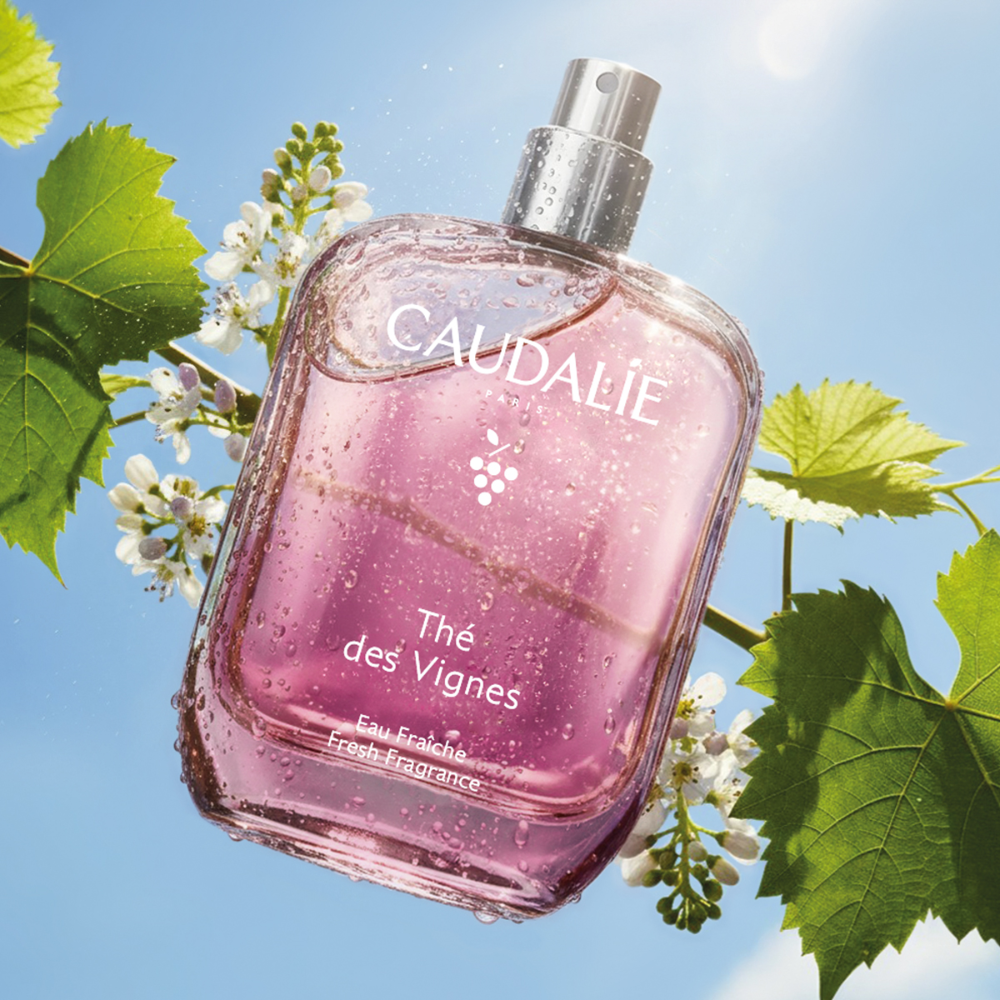
Caudalíe Thé Des Vignes Fresh Fragrance 100mLA fresh eau fraîche fragrance with a musky, floral and spicy profile. Ginger contributes citrus-spice freshness, neroli provides a soft orange-blossom character, and white musk creates a smooth, enveloping finish; orange blossom and jasmine are also identified. Spray onto wrists, elbows and neck or onto clothing for greater intensity.20,84 £*Shipping: 7,03 £Secure redirect to the provider
-
Caudalíe Eau Des Vignes Fresh Fragrance 50mLA perfume. To refresh and brighten your summer, Mathilde Thomas, the Caudalie creator, joined the perfumer Alberto Morillas, and decided to create an energizing but sensual fragrance. A stroll on a summer afternoon at the heart of the vineyards. In this fragrance, the sparkling notes of bergamot are combined the refinement of lily, and the sensuality of white musk.14,97 £*Shipping: 5,34 £Secure redirect to the provider
-
Caudalíe Eau Fraiche Rose de Vignes Fresh Fragrance 50mLA shower gel. This bright and shimmering fragrance captures the scent of the roses of the vineyard dewy in the morning and adorned with sharp notes of vine branches and stems. With refreshing grapefruit opening notes and an unexpected rhubarb, there are notes of blackcurrant heart and Grasee roses from the French Riviera.14,97 £*Shipping: 5,34 £Secure redirect to the provider
-
Caudalíe Summer Essentials Kit + BagA sunscreen for sensitive skin. Beauty essentials kit + bag. Vinoclean mousse 50 mL, gently cleanses the skin. Vinohydra gel 15mL, our star moisturizing for sensitive skin. Ange des Vignes Shower Gel 30mL, to clean your skin with all softness. Sunscreen SPF50+ 20mL, for a delicious protection of UV rays.10,28 £*Shipping: 7,03 £Secure redirect to the provider
-
Is it "des August" or "des Augusts"?
The correct form is "des Augusts." In German, when indicating possession or association with a month, the genitive case is used. Therefore, when referring to something belonging to or associated with the month of August, it should be "des Augusts." **
-
Is it "des Indexes" or "des Index"?
The correct form is "des Indexes." In French, when a word ends in "x" and is masculine, the plural form is created by adding "es" to the end of the word. Therefore, "des Indexes" is the plural form of "des Index." **
-
Is it "des Betriebs" or "des Betriebes"?
Both "des Betriebs" and "des Betriebes" are correct in German. "Des Betriebs" is the more commonly used form, while "des Betriebes" is considered more formal and less frequently used in modern language. Both forms are genitive cases of the noun "Betrieb" and can be used interchangeably depending on the context and personal preference. **
-
Does it say "des ich" or "des ichs"?
The correct form is "des ich" as "ich" is a masculine noun in German and the genitive case does not require an additional "s" at the end. Therefore, the correct genitive form is "des ich." **
Similar search terms for Caudalíe-Thé-Des-Vignes
-
Rouge 'Vieilles Vignes' Domaine Houillon 2021The wine estate Domaine Houillon presents the Rouge ‘Vieilles Vignes’, an expression of Grenache with remarkable smoothness and charm. The production philosophy adopted by Aurélien and Charlotte Houillon, owners of Domaine Houillon, emphasizes maximum respect for the cycles of nature and the well-being of the environment. In addition to applying the principles of organic farming, the Houillon couple fertilizes the soil with manure obtained from the droppings of the horse Victoire and the donkey Castor, thus excluding the use of chemical fertilizers. The Rouge ‘Vieilles Vignes’ from Domaine Houillon is produced solely from Grenache grapes from old vines over 70 years of age, cultivated under organic and biodynamic practices on clay-limestone soils. When the grapes have reached the ideal ripeness, manual harvesting and total destemming of the bunches are carried out, followed by spontaneous alcoholic fermentation of the must in stainless steel tanks thanks to the sole presence of indigenous yeasts, associated with as many as 14 weeks of skin maceration. Following the racking, the mass is transferred to oak barrels of multiple passings for aging of about 10 months. Throughout the entire production process, the use of clarification or filtration operations is excluded, as well as the use of additives and enological aids, including sulfites. Domaine Houillon ‘Vieilles Vignes’ Rouge has an intense ruby red color. The nose shows a crunchy fruit with hints of blackberry and ripe cherry, combined with floral notes of violet and delicate hints of sweet spices. Rich and juicy tasting, characterized by pronounced smoothness, soft body, and fine velvety tannins. The long finish emphasizes fruity and slightly spicy perceptions consistent with the nose.39,00 £*Shipping: 48,00 £Secure redirect to the provider
-
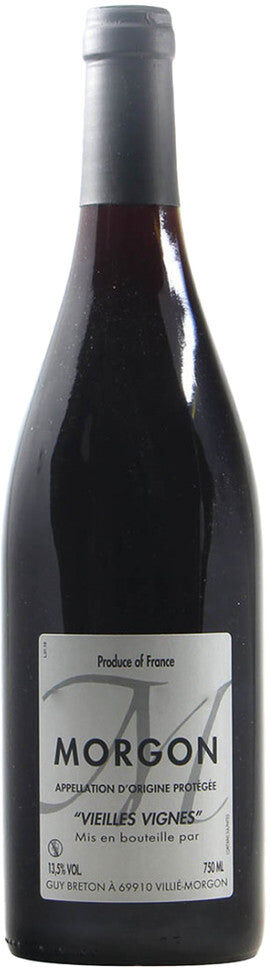
Morgon Vieilles Vignes Guy Breton 2023Guy Breton presents his Morgon ‘Vieilles Vignes’, a complex red wine with a fruity and delicately spicy aromatic profile. Guy Breton took over the family Domaine in the 1980s, adopting from the outset a craft production vision aimed at truly enhancing the territory of Beaujolais. This noble purpose has been and continues to be fueled by the finesse and grace of his wines, made with the utmost respect for nature and the singular expression of the terroir. Guy manages just 4 hectares of vineyards scattered around the winery, located in the municipality of Villié-Morgon. The term “Vieilles Vignes” refers to the advanced age of the vines from which the grapes come. The Morgon ‘Vieilles Vignes’ by Guy Breton is a 100% Gamay from old vines over 80 years old, rooted in soils predominantly made up of granite and sands in the subzones of Saint-Joseph and Grand Cras. After harvest, which is carried out strictly by hand, the grapes are vinified in red with spontaneous alcoholic fermentation. The subsequent aging period takes place for 10 months on fine lees in third passage oak barrels. The mass is finally bottled without undergoing any filtration. To the eye, the ‘Vieilles Vignes’ Guy Breton Morgon expresses a matte ruby red appearance. The olfactory panorama is a succession of fruity aromas of cherry and raspberry enriched with smoky and mineral notes. Savory and deep taste, refined and complex, characterized by juicy freshness and velvety tannins. Excellent interpretation of the appellation of Morgon, one of the most important denominations in all of Beaujolais. Due to its significant structure, which does not compromise on balance, this bottle can pair with a wide range of dishes.35,00 £*Shipping: 48,00 £Secure redirect to the provider
-
Caudalíe Vinopure Salicylique Serum Anti-ImperfectionsA facial serum for oily or blemish-prone skin. Reduces blemishes, pores, and blackheads without irritation. Refines skin texture and restores a healthy glow. Controls excess oil for a matte finish. Suitable for daily use before moisturizer. Natural Salicylic Acid: Unclogs pores and smooths skin. Niacinamide (Vitamin B3): Shrinks pores and soothes skin.11,09 £*Shipping: 5,34 £Secure redirect to the provider
-
Does it have to be "des Vorstands" or "des Vorstandes"?
Both "des Vorstands" and "des Vorstandes" are correct genitive forms of the noun "Vorstand" in German. The form "des Vorstands" is the more commonly used and is considered the standard form. However, "des Vorstandes" is also acceptable and can be used in more formal or literary contexts. Both forms are grammatically correct and can be used interchangeably. **
-
How do you say it correctly: "des Projekts" or "des Projektes"?
Both "des Projekts" and "des Projektes" are correct in German. The choice between the two forms depends on personal preference or regional variations. "Des Projekts" is more commonly used in standard German, while "des Projektes" is often preferred in southern regions of Germany and Austria. **
-
Does one say "Zur Zeit des Barock" or "Zur Zeit des Barocks"?
One would say "Zur Zeit des Barock" in German. "Barock" is a masculine noun, so the preposition "des" is used before it. This construction follows the genitive case in German grammar. Therefore, the correct phrase is "Zur Zeit des Barock." **
-
What is the difference between the partitive article and the article "des/des"?
The partitive article in French is used to indicate an unspecified quantity of something, while the article "des" is the plural form of the indefinite article "un/une" and is used to indicate a specific but unspecified quantity of something. For example, "du pain" (some bread) uses the partitive article to indicate an unspecified quantity, while "des pommes" (some apples) uses the article "des" to indicate a specific but unspecified quantity of apples. In general, the partitive article is used when referring to uncountable nouns, while the article "des" is used when referring to countable nouns in the plural form. **
* All prices are inclusive of VAT and, if applicable, plus shipping costs. The offer information is based on the details provided by the respective shop and is updated through automated processes. Real-time updates do not occur, so deviations can occur in individual cases. ** Note: Parts of this content were created by AI.