Buy saunameister.eu ?
We are moving the project
saunameister.eu .
Are you interested in purchasing the domain
saunameister.eu ?
domain@kv-gmbh.de · 0541-91531010
Buy saunameister.eu ?
Which oil is used for the limited slip differential?
The oil used for a limited slip differential is typically a special type of gear oil that is specifically designed for use in limited slip differentials. This gear oil is formulated to provide the necessary lubrication and friction modification properties required for the operation of a limited slip differential. It is important to use the correct type of gear oil recommended by the vehicle manufacturer to ensure proper performance and longevity of the limited slip differential. **
What should be done if the rear differential is oil damp and the engine is oil damp after the TÜV inspection?
If the rear differential and engine are both oil damp after a TÜV inspection, it is important to address these issues promptly to prevent any further damage. First, the source of the leaks should be identified and repaired by a qualified mechanic. This may involve replacing gaskets or seals that are causing the leaks. It is crucial to ensure that both the rear differential and engine are properly sealed to prevent any potential safety hazards or mechanical failures. Regular maintenance and inspections can help prevent such issues in the future. **

Similar search terms for ORLEN-QFS104B10-Differential-oil
Top-Angebote
Products related to ORLEN-QFS104B10-Differential-oil:
-
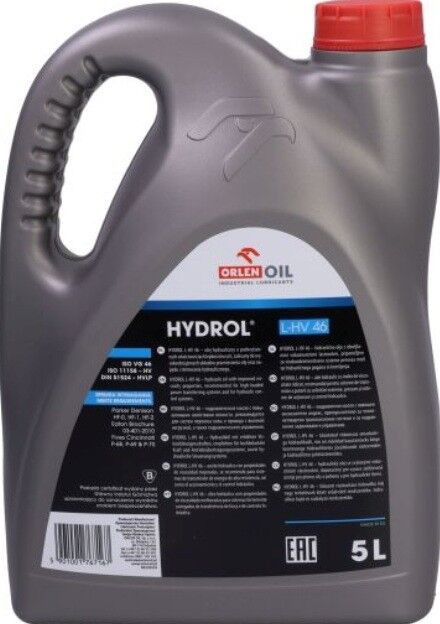
ORLEN QFS174B50 Hydraulic OilContainer Type: Canister; ISO viscosity class: VG 46; DIN/ISO: DIN 51524-3 HVLP, ISO 6743-4 HV, ISO 11158 HV; Vehicle Equipment: for vehicles with hydraulic auxiliary drive; Chemical Properties: high corrosion protection; Product line: Hydrol; Version: L-HV 46; Capacity [litre]: 5; Liquid:39,99 £*Shipping: 8,45 £Secure redirect to the provider
-
ORLEN QFS022B50 Hydraulic OilCapacity [litre]: 5; Container Type: Canister; Vehicle type: tractor; Vehicle Equipment: for vehicles with hydraulic auxiliary drive, for vehicles with hydraulic system; ISO viscosity class: VG 46; DIN/ISO: DIN 51524 HVLP, ISO 11158 HV; Product line: Boxol; Version: 26; Liquid:28,49 £*Shipping: 8,45 £Secure redirect to the provider
-
ORLEN QFS478K20 Engine oilCapacity [litre]: 20; Container Type: Canister; Oil Viscosity Classification SAE: 15W-40; Vehicle type: Car, Trucks; Oil: Mineral Oil; Specification: ACEA E9, ACEA E7, API SM, API CF, JASO DH-2; Manufacturer recommendations: ALLISON TES-439, CUMMINS CES 20086, CATERPILLAR ECF-3, DDC DFS 93K222, DQC III-18 LA, Ford WSS-M2C171-F1, Mack EOS-4.5, MAN M 3775, MAN M 3575, MTU-2.1, Renault RLD-3, Volvo VDS-4.5; Product line: Ultor; Version: Futuro; API: API SM, API CF; JASO: JASO DH-2; ACEA: ACEA E9, ACEA E7; Liquid: ; Oil Fill Quantity [l]: 1,3, 7,0, 3,8, 5,8, 5,0, 4,3, 4,8, 4,5, 5,5, 4,7, 5,9, 6,8, 6,9, 8,0, 5,3, 7,4, 6,5, 9,5, 5,1, 11,4, 9,8, 6,0, 7,3, 7,7, 3,9, 9,0, 6,2, 3,0, 3,5, 6,3, 5,4, 4,1, 4,2, 7,6, 8,2, 5,2, 4,0, 6,1, 7,5, 14,1, 10,5, 5,6, 7,2, 5,7, 6,4, 3,2, 3,7, 6,6, 9,3, 11,5, 9,2, 2,9, 7,1, 13,0; Vehicle Equipment: for vehicles without diesel particulate filter (DPF), for vehicles with diesel particulate filter (DPF), for vehicles with extended service intervals, for vehicles without extended service intervals; Construction Year to: 12/2007, 12/2009, 01/1998, 01/2012, 05/2016, 12/1999, 01/2006, 01/2016, 01/2011, 12/2008, 12/2021; Construction Year from: 01/2008, 01/2016, 01/1997; TecDoc Engine Number: 2881, 4850, 27053; not for vehicle equipment line/trim level: BS II, BS III; Vehicle Equipment Line/Trim Level: BS II, BS III, Quadrajet, Aqua, Aura, Terra, Plus, Without Code ZL3; Engine Code: 475 IDI; 52kW, BS-3, 475 IDT 1405cc 52kw; Emissions Standard: Euro 5, Euro 6; Supplementary Article / Supplementary Info Info 2: for difficult operating conditions, not for difficult operating conditions; Transmission Type: Manual Transmission234,99 £*Shipping: 1,99 £Secure redirect to the provider



-
What is differential calculus?
Differential calculus is a branch of mathematics that deals with the study of rates at which quantities change. It involves the concept of derivatives, which represent the rate of change of a function at a given point. Differential calculus is used to solve problems involving motion, optimization, and many other real-world applications where understanding how quantities change over time is important. It is a fundamental tool in mathematics and is essential in fields such as physics, engineering, economics, and biology. **
-
What are differential calculations?
Differential calculations involve the process of finding the rate of change of a quantity with respect to another quantity. This can be done using techniques such as differentiation, which involves finding the derivative of a function. These calculations are used in various fields such as physics, engineering, economics, and biology to analyze how one quantity changes in relation to another. Differential calculations are essential for understanding and predicting the behavior of systems and processes in the real world. **
-
What is differential covariance?
Differential covariance refers to the difference in the covariance between two variables across different groups or conditions. It is used to assess whether the relationship between two variables varies depending on different levels of a third variable. This can help to identify how the strength and direction of the relationship between two variables may change under different circumstances or conditions. Differential covariance is important in understanding how different factors may influence the relationship between variables in a given context. **
-
What are differential tasks?
Differential tasks are tasks that require different levels of skill, knowledge, or expertise to complete. These tasks are often assigned to individuals based on their abilities and strengths, with the goal of maximizing efficiency and productivity. By assigning differential tasks, organizations can ensure that each task is being completed by the most qualified individual, leading to better overall performance. This approach also allows for the development and utilization of diverse skill sets within a team or organization. **

What should be done if the differential is oil damp at the rear and the engine is oil damp after the TÜV inspection?
If the differential is oil damp at the rear and the engine is oil damp after the TÜV inspection, it is important to address these issues promptly to prevent any further damage to the vehicle. The first step would be to identify the source of the leaks and repair or replace any damaged seals or gaskets. It is also advisable to check the fluid levels in both the differential and engine and top them up if necessary. Regular maintenance and inspections can help prevent such issues in the future. **
When can I activate which lock, the differential lock or the locking differential?
The differential lock is typically activated in off-road or low-traction situations where one wheel is spinning freely while the other is not receiving power. This helps to evenly distribute power to both wheels for better traction. On the other hand, the locking differential is usually engaged in high-traction situations where both wheels need to rotate at the same speed, such as when driving on a straight road or during high-speed maneuvers. It is important to refer to your vehicle's manual for specific guidelines on when to activate each type of lock. **
Top-Angebote
Products related to ORLEN-QFS104B10-Differential-oil:
-
ORLEN QFS094B10 Differential oilCapacity [litre]: 1; Container Type: Bottle; Oil Viscosity Classification SAE: 85W-90; Vehicle type: Car; Transmission Type: Differential Gear; Specification: API GL-5; Product line: Hipol; Version: 15F; Liquid: ; Transmission Number: CVT, 5/1, R15M-D 5/1, 4/1, 6/1, (4x4), G40 5/1, G52 5/1, M15M-D 5/1, Y16M-D 6/1, G54 5/1, L40 5/1, L42 5/1, M15 MX-D 5/1, R15MX-D 5/1, G35M-R 5/1, F35M-R 5/1; Model Year from: 1988, 2010, 1984, 1991, 1994, 1999, 2011, 2014, 2016, 2000, 2001, 2007, 2003, 2004, 1995, 2002, 2005, 1998, 2008, 2012, 1997, 2006, 2009, 2013, 2015, 2021; Model Year to: 1991, 2012, 1986, 1994, 2000, 1997, 2005, 2014, 2015, 2017, 2001, 2003, 2007, 2006, 1999, 2004, 2019, 2009, 2002, 2010, 2011, 2013, 2016, 2008, 2022; Fill quantity [l]: 1,7, 0,9, 1,3, 1,2, 2,6, 0,5, 1,6, 1,5, 1, 0,7, 3,8, 3,5, 1,05, 2, 1,43, 2,4, 1,1, 1,55, 0,55, 1,4, 0,85, 3,65, 0,65, 3,6, 0,8, 1,8, 5,2, 1,35, 1,65, 1,85, 0,45, 2,8, 1,9, 0,6, 0,76, 2,5, 0,75; Fill quantity from [l]: 1,6, 1,7, 0,45, 1,05, 2,6, 1,43, 1,15, 2,5, 1,3, 1,2, 0,55; Fill capacity to [l]: 2, 1,9, 2,6, 0,55, 1,15, 2,3, 3,2, 1,73, 1,35, 3, 1,4, 1,5, 2,2, 0,89,59 £*Shipping: 8,45 £Secure redirect to the provider
-
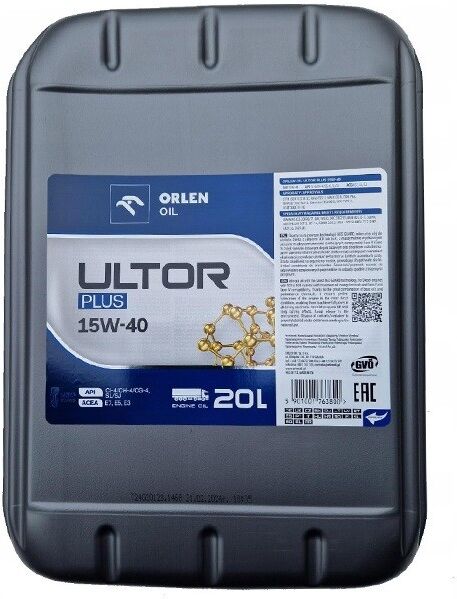
ORLEN QFS486K20 Engine oilOil: Mineral Oil; Capacity [litre]: 20; Container Type: Canister; Oil Viscosity Classification SAE: 15W-40; Vehicle type: Trucks, Car; Specification: ACEA E7, API SL, API CI-4; Manufacturer recommendations: CATERPILLAR ECF-1-A, CUMMINS CES 20071, CUMMINS CES 20072, CUMMINS CES 20075, CUMMINS CES 20076, CUMMINS CES 20077, CUMMINS CES 20078, DQC III-05, Mack EO-M Plus, Mack EO-N, MAN M 3275-1, MB 228.3, MB 229.1, MTU-2, Renault RLD-2, Volvo VDS-3, VW 505 00; Product line: Ultor; Version: Plus; ACEA: ACEA E7; API: API SL, API CI-4; Liquid: ; Engine Code: S14, M20B25, M20B27, M50, VM84A, M60B30, S38B36, S38B38, M60B40, M 102.018, M 102, M 102.V20/E20, M 102 V20, M 102.E20, M 102.983, M 102.E23, M 103.E26, OM601, OM602, OM602A, M 102.V20, M 103, M 103.E30, OM603, OM603.913, M 111, M 104, M 104.992, M 119, L-4 SOHC, 10S, 12ST, 12SC, 13SB, 16SV, 16SH, 18E, 16 D, 16 DA, RF, Y.., 13N, 13NB, YD25DDTi, 13S, 13SC, 16S, 16, M 115, M 110, OM603.972, OM616, OM617, STR (Peugeot XD3), SF Peugeot XD3T, M 103.984, M 104.981, M 120, M 102.989, M 103.987, OM602.983, OM603.931, 16 D, OM603A, M104.944, M104.990, M104.99x, M119.970/971, M119.971, M119.980/981, M120.980, OM601.913, OM604.910, OM605, M 111.980, M 111.961, M 104.941, 4.., CVH, LTB, R.., 20E, 25E, 30E, RFM, RFN, C1C, C1E, C2J, C1J, F2N, F8MA-720, F3N, F8Q, F7P, F3P, F2N-B, F2N, F3N, F2N-C, J7R, J8S-A704, J8S-B714, J7R-750, J7T, J6R, Z7V, J8S, Z7W-B700, F8M, C1G, E7J, E6J, C3J, F1N.7.20, 852/J8S, J8S-C720, S8U D750, J8S 772, J8S 776, J7T-722, Z7W712, Z7W713, E5F, F7P 722, F3P 710, F3P 710/714, C3G, A06/635, V06/644, TU9, TU2/4, TU3, K9A-TUD 3, G13/646, 180/A, 161/A, 171 A, 159A, XU9, 162, TU3A, XU92C, J6TA.500, M25/659, M25/662, M25/660, M25/648, M25/669, D 9B/XUD 9A, U25/661, U25/637, 161A/XUD7, XUD11A, XU10J2 (R6A), XU10J2TE/Z (R6Y), ZPJ (SFZ), ZPJ4, XUD9A/9Y, XUD9TE/Y, TU3-2/K, TU3M/2, XU5M/K, XU7JP/Z, XU9JA/K, XU10J2C/Z, XU10J4D/Z, BFZ, 2.4 16V, 127A5.000, 156A4.000, 100GL6.200, 146A000, A112B1.054, 156A3.000, 156A2.000, 156A2.246, 1170 A1.046, 156C.046, 138AR2.000 B, 160A1.000, 160A1.046, 160A6.000, 835C1000, 159A3.048, 835C2000, 159A6.046, 160A8.046, 138A3.000, 138B3.000, 149A2.000, 138B6.000, 149A3.000, 46A048, 146A1000, 138B.000, 146A4044, 149A7.000, 138B2.000, 146A2000/046, 146B1000, A112 B2000, 146A4000/048, 149B3.000, A112 B1000, 156A2000, 146B2000, 146A8000, 831A1000, 831B7000, 831A4000, 831B4000, 138D1000, 831A2000, 843B.000, 834E.146, 8144.91, 835A4000, 835A1000, 170A1046, 154A1.000, 834B.146, 834B.000, 154C3.000, 154A2.000, 154C4.000, 8144.97, 8144.97Y, 154C4.046, 159A2.000, 159A3.046, 159A4.000, 8144.21, 8144.67, 8140.27, 170B/XN1T, 149B1.000, 280 A1000, B14, B200, B172, D16, B18E, B18 FT(M), B18FT, B20F 116/118, B18 KP, B18 E, B18KP, B18U-103, B230FB, B5204S, B5252S, B5254FS, B204i, B202 Turbo, B204, B201i, B234, M64.05/06, TU3F2K, AJ-6, 20H, Honda, S, C25A, C27A-V6, 4924 SHI RG, Tdi, A8A (XUD 7TE), K16, Honda ZC, Honda D16, T16, T16 T, M 16, Perkins Prima 80T, 2L, E6F, E7F, G8T, Z7X, F3R,...152,99 £*Shipping: 1,99 £Secure redirect to the provider
-
ORLEN QFS174B50 Hydraulic OilContainer Type: Canister; ISO viscosity class: VG 46; DIN/ISO: DIN 51524-3 HVLP, ISO 6743-4 HV, ISO 11158 HV; Vehicle Equipment: for vehicles with hydraulic auxiliary drive; Chemical Properties: high corrosion protection; Product line: Hydrol; Version: L-HV 46; Capacity [litre]: 5; Liquid:39,99 £*Shipping: 8,45 £Secure redirect to the provider
-
Which oil is used for the limited slip differential?
The oil used for a limited slip differential is typically a special type of gear oil that is specifically designed for use in limited slip differentials. This gear oil is formulated to provide the necessary lubrication and friction modification properties required for the operation of a limited slip differential. It is important to use the correct type of gear oil recommended by the vehicle manufacturer to ensure proper performance and longevity of the limited slip differential. **
-
What should be done if the rear differential is oil damp and the engine is oil damp after the TÜV inspection?
If the rear differential and engine are both oil damp after a TÜV inspection, it is important to address these issues promptly to prevent any further damage. First, the source of the leaks should be identified and repaired by a qualified mechanic. This may involve replacing gaskets or seals that are causing the leaks. It is crucial to ensure that both the rear differential and engine are properly sealed to prevent any potential safety hazards or mechanical failures. Regular maintenance and inspections can help prevent such issues in the future. **
-
What is differential calculus?
Differential calculus is a branch of mathematics that deals with the study of rates at which quantities change. It involves the concept of derivatives, which represent the rate of change of a function at a given point. Differential calculus is used to solve problems involving motion, optimization, and many other real-world applications where understanding how quantities change over time is important. It is a fundamental tool in mathematics and is essential in fields such as physics, engineering, economics, and biology. **
-
What are differential calculations?
Differential calculations involve the process of finding the rate of change of a quantity with respect to another quantity. This can be done using techniques such as differentiation, which involves finding the derivative of a function. These calculations are used in various fields such as physics, engineering, economics, and biology to analyze how one quantity changes in relation to another. Differential calculations are essential for understanding and predicting the behavior of systems and processes in the real world. **
Similar search terms for ORLEN-QFS104B10-Differential-oil
-
ORLEN QFS022B50 Hydraulic OilCapacity [litre]: 5; Container Type: Canister; Vehicle type: tractor; Vehicle Equipment: for vehicles with hydraulic auxiliary drive, for vehicles with hydraulic system; ISO viscosity class: VG 46; DIN/ISO: DIN 51524 HVLP, ISO 11158 HV; Product line: Boxol; Version: 26; Liquid:28,49 £*Shipping: 8,45 £Secure redirect to the provider
-
ORLEN QFS478K20 Engine oilCapacity [litre]: 20; Container Type: Canister; Oil Viscosity Classification SAE: 15W-40; Vehicle type: Car, Trucks; Oil: Mineral Oil; Specification: ACEA E9, ACEA E7, API SM, API CF, JASO DH-2; Manufacturer recommendations: ALLISON TES-439, CUMMINS CES 20086, CATERPILLAR ECF-3, DDC DFS 93K222, DQC III-18 LA, Ford WSS-M2C171-F1, Mack EOS-4.5, MAN M 3775, MAN M 3575, MTU-2.1, Renault RLD-3, Volvo VDS-4.5; Product line: Ultor; Version: Futuro; API: API SM, API CF; JASO: JASO DH-2; ACEA: ACEA E9, ACEA E7; Liquid: ; Oil Fill Quantity [l]: 1,3, 7,0, 3,8, 5,8, 5,0, 4,3, 4,8, 4,5, 5,5, 4,7, 5,9, 6,8, 6,9, 8,0, 5,3, 7,4, 6,5, 9,5, 5,1, 11,4, 9,8, 6,0, 7,3, 7,7, 3,9, 9,0, 6,2, 3,0, 3,5, 6,3, 5,4, 4,1, 4,2, 7,6, 8,2, 5,2, 4,0, 6,1, 7,5, 14,1, 10,5, 5,6, 7,2, 5,7, 6,4, 3,2, 3,7, 6,6, 9,3, 11,5, 9,2, 2,9, 7,1, 13,0; Vehicle Equipment: for vehicles without diesel particulate filter (DPF), for vehicles with diesel particulate filter (DPF), for vehicles with extended service intervals, for vehicles without extended service intervals; Construction Year to: 12/2007, 12/2009, 01/1998, 01/2012, 05/2016, 12/1999, 01/2006, 01/2016, 01/2011, 12/2008, 12/2021; Construction Year from: 01/2008, 01/2016, 01/1997; TecDoc Engine Number: 2881, 4850, 27053; not for vehicle equipment line/trim level: BS II, BS III; Vehicle Equipment Line/Trim Level: BS II, BS III, Quadrajet, Aqua, Aura, Terra, Plus, Without Code ZL3; Engine Code: 475 IDI; 52kW, BS-3, 475 IDT 1405cc 52kw; Emissions Standard: Euro 5, Euro 6; Supplementary Article / Supplementary Info Info 2: for difficult operating conditions, not for difficult operating conditions; Transmission Type: Manual Transmission234,99 £*Shipping: 1,99 £Secure redirect to the provider
-
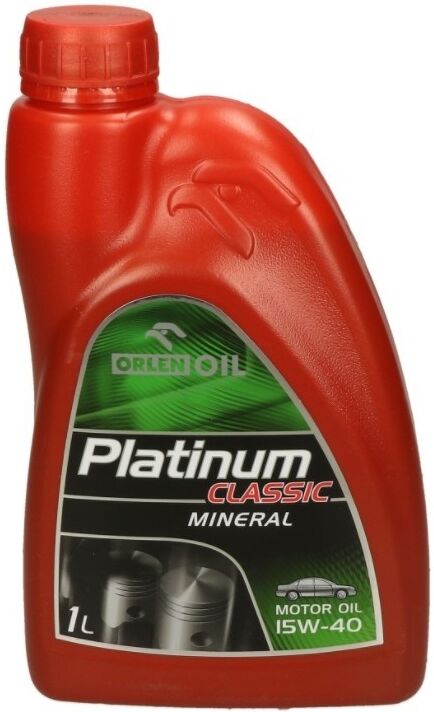
ORLEN QFS411B10 Engine oilCapacity [litre]: 1; Oil Viscosity Classification SAE: 15W-40; Manufacturer recommendations: MB 229.1; Container Type: Bottle; Specification: API SL, ACEA A3/B3, API CF, API SJ, ACEA A3/B4; Oil: Mineral Oil; Product line: PLATINUM CLASSIC; Version: MINERAL; ACEA: ACEA A3/B3, ACEA A3/B4; API: API SL, API CF, API SJ; Liquid:7,99 £*Shipping: 8,45 £Secure redirect to the provider
-
ORLEN QFS411B60 Engine oilOil Viscosity Classification SAE: 15W-40; Manufacturer recommendations: MB 229.1; Container Type: Bottle; Capacity [litre]: 4; Specification: API SL, ACEA A3/B3, API CF, API SJ, ACEA A3/B4; Oil: Mineral Oil; Product line: PLATINUM CLASSIC; Version: MINERAL; ACEA: ACEA A3/B3, ACEA A3/B4; API: API SL, API CF, API SJ; Liquid:25,99 £*Shipping: 8,45 £Secure redirect to the provider
-
What is differential covariance?
Differential covariance refers to the difference in the covariance between two variables across different groups or conditions. It is used to assess whether the relationship between two variables varies depending on different levels of a third variable. This can help to identify how the strength and direction of the relationship between two variables may change under different circumstances or conditions. Differential covariance is important in understanding how different factors may influence the relationship between variables in a given context. **
-
What are differential tasks?
Differential tasks are tasks that require different levels of skill, knowledge, or expertise to complete. These tasks are often assigned to individuals based on their abilities and strengths, with the goal of maximizing efficiency and productivity. By assigning differential tasks, organizations can ensure that each task is being completed by the most qualified individual, leading to better overall performance. This approach also allows for the development and utilization of diverse skill sets within a team or organization. **
-
What should be done if the differential is oil damp at the rear and the engine is oil damp after the TÜV inspection?
If the differential is oil damp at the rear and the engine is oil damp after the TÜV inspection, it is important to address these issues promptly to prevent any further damage to the vehicle. The first step would be to identify the source of the leaks and repair or replace any damaged seals or gaskets. It is also advisable to check the fluid levels in both the differential and engine and top them up if necessary. Regular maintenance and inspections can help prevent such issues in the future. **
-
When can I activate which lock, the differential lock or the locking differential?
The differential lock is typically activated in off-road or low-traction situations where one wheel is spinning freely while the other is not receiving power. This helps to evenly distribute power to both wheels for better traction. On the other hand, the locking differential is usually engaged in high-traction situations where both wheels need to rotate at the same speed, such as when driving on a straight road or during high-speed maneuvers. It is important to refer to your vehicle's manual for specific guidelines on when to activate each type of lock. **
* All prices are inclusive of VAT and, if applicable, plus shipping costs. The offer information is based on the details provided by the respective shop and is updated through automated processes. Real-time updates do not occur, so deviations can occur in individual cases. ** Note: Parts of this content were created by AI.